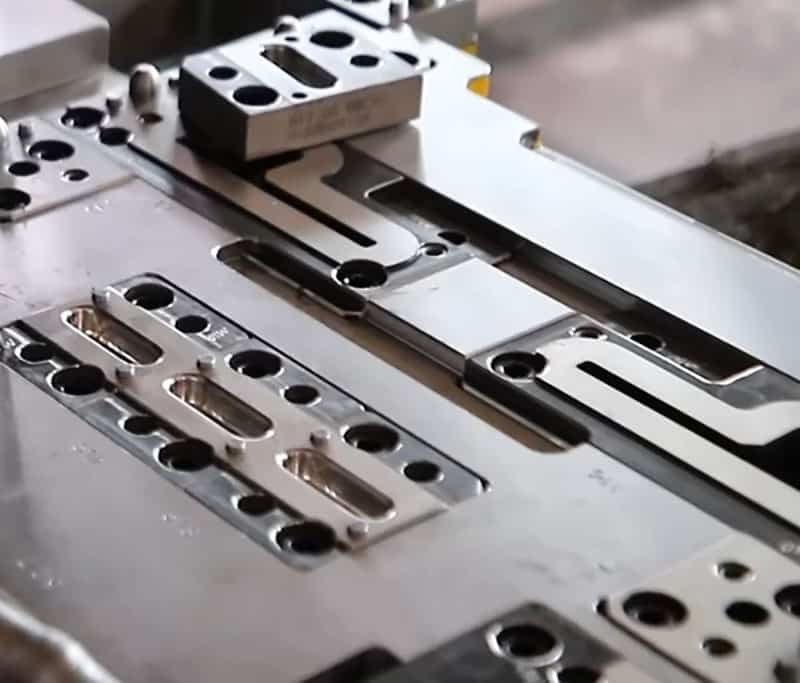
The injection mold tooling and production molds cannot be used interchangeably since they are designed with entirely different life cycle objectives. Time-bound tooling choices can affect the long-term manufacturing performance: they determine the process of the part validation, the risk management, and the commitment of the cost in the supply chain even before the volumes are verified. Most of the buyers believe that all injection molds are used in the same way despite the fact that tooling purpose determines performance, cost, and durability.
The use of injection mold tooling and production molds is not based on the same purpose and selecting the wrong nature results in unnecessary cost and risk, and performance restrictions. The most widespread mix-up is associated with the view of simple mold structure core, cavity, ejector system and the impression that the type can be used interchangeably. It isn’t.
The major distinction between injection mold tooling and production molds is not at all the simple structure of the molds but their lifecycle intent. When you think of intent as the main input in your design, the choices regarding the quality of steel, cooling approach, wear control, parting-line strength, and maintenance are more obvious, and the expectations in your project are more consistent.
Why Tooling Purpose Matters in Injection Mold Projects
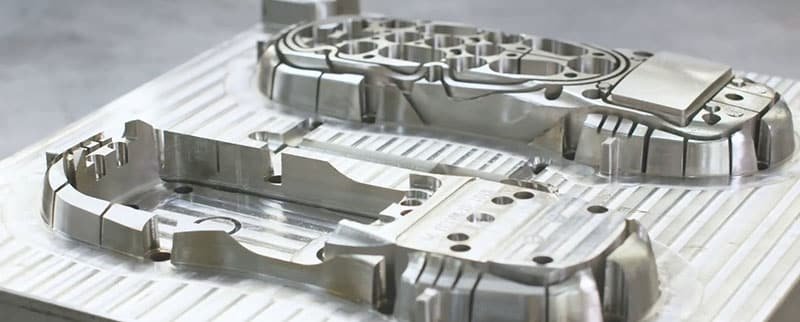
The first engineering decision is the tooling purpose since it determines the definition of a good enough cost, durability, and risk. Injection molding The geometry of a part can often be replicated under varying mold builds, but the purpose modifies the approach to designing a part to be reliable, stable and long-lasting.
In the case where tooling purpose is defined properly, design decisions are motivated by:
- Tolerance strategy: either require repeatable Cp/Cpk performance at volume or only functional fit checks at validation.
- Cooling strategy: either adequate cooling of the pilot cadence or optimization of cycle time stability of long runs.
- Gate and runner robustness: do you want to experience more variation to go fast or do you need to experience a stable and repeatable filling behavior over a wide process window.
- Material and heat treatment options: either learning-optimised or high-cycle optimised production.
- Maintenance planning: is it minimal and reactive maintenance or a planned maintenance consisting of scheduled inspection and wear parts that are replaceable.
Failure to understand the intent of tooling brings about gaps in expectations. A group can order a mold and believe that it can carry through to full production, whereas the supplier constructed to pilot. It is a foreseeable outcome: unpredictable wear, flashing, dimensional drift, high frequency of stops and hasty retrofits that are more expensive than doing it right in the first place.
To get an idea of end-to-end capabilities and how such decisions will be integrated into a larger build workflow, see our mold making services.
What Injection Mold Tooling Is Designed For
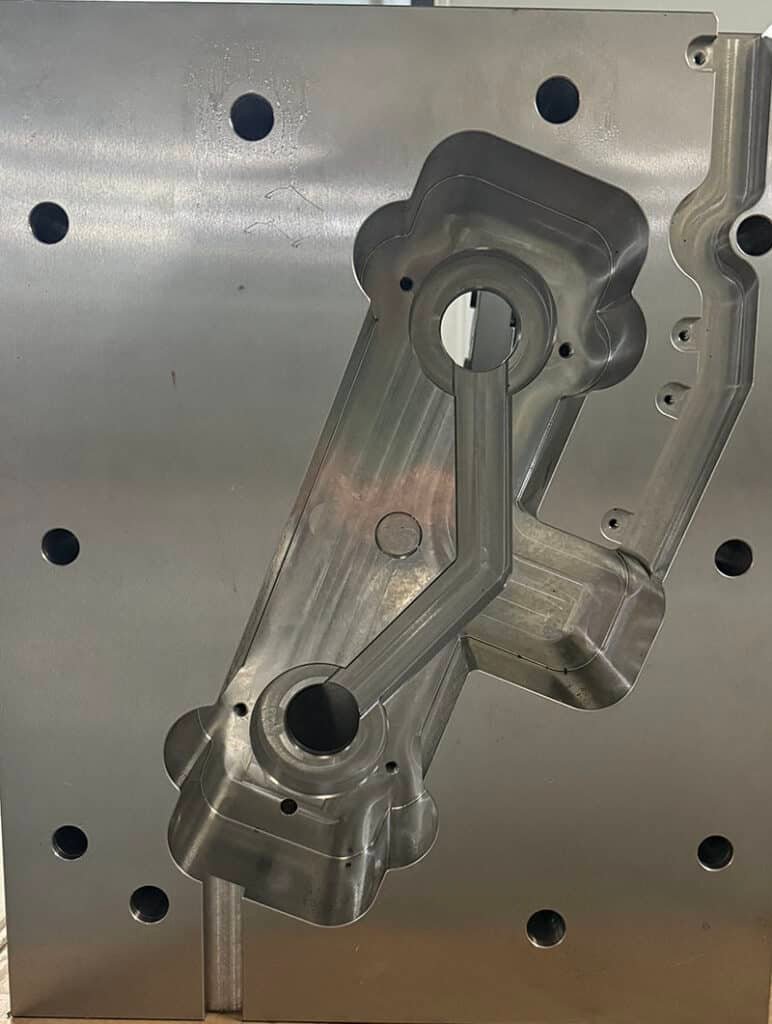
Injection mold tooling is generally not designed to support long-term high-volume production, it is intended to confirm product and process assumptions in the shortest possible time. Practically the aim is to put molded parts in the hands of engineering and stakeholders within a short time – geometry, assembly fit, cosmetic requirements, and early performance can be checked.
Typical injection mold tooling purposes are:
- Verification of prototype and design: confirmation of wall thickness strategy, ribs/bosses, snap fit, and assembly interfaces.
- Pilot construction and initial testing: creating a known volume to be used in functional testing or regulatory testing, or customer testing.
- Low-volume production: in cases of low volumes and unpredictability, speed and learning are important instead of lifecycle optimization.
Due to the need to achieve speed in validation and flexibility, tooling molds frequently typically have trade-offs that are tolerable in the initial work stages:
- Expenses in material decisions: steels and inserts can be chosen to minimize the lead time and price.
- Simplified cooling: sufficient to operate parts, but not necessarily optimized to stabilize cycle time and dimensions.
- Fewer replaceable wear parts, less heavy-duty sliding capabilities, or less conservative bearing lengths are features of reduced wear management.
- Shorter machining and finishing paths: can be acceptable to pilot requirements, but can not necessarily be robust enough to support long and repeated cycles.
This is not in any general sense of lower quality, it is fit-to-purpose engineering. The risk arises when a tooling mold is forced into high-cycle production and the design purpose is not enhanced. To get a more detailed definition of production-level intent modifications of the tooling concept, refer to production tooling in injection molding.
What a Production Mold Is Designed For
A production mold is created to produce much output with uniformity and extended service life with anticipated maintenance and predictable reliability. It implies that the mold is not just designed to produce parts–it is designed to manage variation in the conditions of actual production: multiple shifts, different operators, lot changes of resin, seasonal temperature variations and long run time.
Molds of production will usually give priority to:
- Irregular stability over cycles: strong alignment, directed ejection, sound parting-line integrity and controlled deflection.
- Consistency of cycle time: designed cooling loops which achieve reduced hot spot, lesser warpage drift and extended stable processing window.
- Wear protection and serviceability: parts are that of maintenance, replacement and tuning without too much downtime.
Tool steel selection
A non-renewable choice is that of steel. Another typical element of production moulds is a combination of steels and heat treatments that are commensurate to the anticipated resin abrasiveness, fill pressure, and cycle counts. For example:
- Greater wear conditions (glass-filled, aggressive additives) demand tougher wear resistance plans.
- Flammable substances (PVC, high moisture exposure, flame retardants) require resistance to corrosion and proper surface coverings.
Cooling and wear management
The two silent cost drivers in the production are cooling and wear.
- Cooling: A production mold includes cooling circuits that are put there to extract the heat uniformly, and not merely lines of some water. This eliminates variation in the cycle time and assists in maintaining dimensions. Under-engineered cooling results in teams paying later through increased cycle times, increased scrap and drift.
- Wear management: Sliding shut-offs, lifters, and surfaces with high friction are developed with bearing length, hardening tactics and removable wear plates. In their absence, you have flash growth, burr growth, and rework–in general, subsequent to the initial half million or so of cycles.
Injection Mold Tooling vs Production Mold — Side-by-Side Comparison
An unmistakable analogy is that most of the variations are due not to can the part be made, but to lifecycle as well as risk assumptions. Either, and only one, of these geometry designs can frequently be used to achieve the same geometry, but only one should satisfy your stability, uptime, and cost-per-part requirements at the desired scale.
Tooling Intent & Performance Comparison
| Dimension | Injection Mold Tooling | Production Mold |
| Primary purpose | Validation & testing | Long-term production |
| Expected tool life | Short to medium | High-cycle |
| Material selection | Cost-optimized | Durability-focused |
| Upfront cost | Lower | Higher |
| Maintenance strategy | Limited | Planned & ongoing |
Quick filter Use this as a quick filter: in case you require consistent performance at a high cycle counts, you must be production intent, despite the appearance of the part.
Rapid Tooling vs Production Mold — When Each Makes Sense
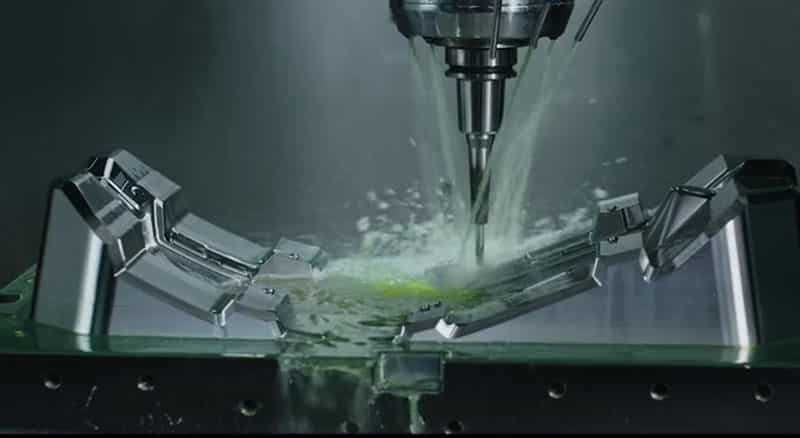
Rapid tooling represents a compromise between the speed of obtaining a functional component and the ability to obtain a more durable component than prototype tooling can be depended on to offer. It is frequently employed where a project is transitioning between validation and early commercialization and the group requires regulated output without having to invest solidly to the full cost and lead time of a hardened production mold.
Rapid tooling is suitable in the following areas:
- Pilot production based on unpredictable forecasts: you have to have parts to sustain early orders, but volumes are not yet predictable.
- Market testing or phased introduction: you must have the parts now but there are still more chances that the design will change.
- Interim capacity prior to the manufacture of production tooling: you do not want to have schedule lapses as a production mold is being manufactured.
The most critical risk is the overextension of rapid tooling of the lifecycle. When you treat rapid tooling like a mold of production you can anticipate:
- increasing maintenance rate,
- increasing downtime,
- dimensional drift or flash growth,
- replacement of components that are not planned,
- escalating cost per part.
To get a workable decision structure on when this rapid tooling ceases to be worthwhile, see rapid tooling vs production mold.
Cost, Tool Life, and Long-Term Trade-Offs
Initial mold price is never much more than a tiny portion of total lifecycle price; uptime, scrap rate, maintenance, and cycle time stability will dominate the actual economics.This is where most procurement-based decisions prove to be wrong: cost is considered the primary variable and the effects are buried in operations.
The following is the lifecycle rationale that most OEMs eventually come to learn (often to their pain):
- A cheaper tooling mold can be acceptable in the instances where volumes are minimal, change is probable and speed is most crucial.
- A production model is more expensive at the beginning as you are purchasing control: stability, predictability, service life.
- The difference between tooling and production intent may be less than the cost of making a lower priced mold work, when you take into consideration:
- downtime,
- rework and retrofits,
- scrap and sorting,
- delayed deliveries,
- engineering away time spent on fire-fighting.
Tool life must be considered as part of a design requirement, not a hope. Assuming that you require 500,000 cycles with tight control, you must consider that in steel selection, cooling design, wear component choice and a maintenance strategy. You will not require those investments at the time you require 20,000 parts to validate it during early stages.
To analyze the reasons behind the possible cost-effective now cheap being expensive later in more detail, review mold cost vs tool life trade-offs.
Common Buyer Mistakes When Choosing Tooling Type
Majority of the tooling issues are as a result of misplaced assumptions between the volume, lifecycle and what the mold was designed to survive. The failure of the mold itself is not very likely to occur unintentionally, it fails as intended, it just did not fail as the customer imagined.
Common mistakes include:
- Using tooling molds for production volumes
- Tooling molds are used in volume production.
- In many cases, tooling molds may initially run fine giving a false sense of security. Wear, shut-offs, flash growth and dimensional stability drift. What appeared to be an economy measure turns to a constant disturbance.
- Underestimating maintenance needs
- Any growing up at volume is a maintenance system. Unless maintenance is scheduled in advance, spares, wear inserts, downtime windows, then the maintenance is emergency maintenance.
- Selecting tooling based on price alone
- Comparison in terms of prices cannot be effective without the lifecycle intention being the same. Two molds may print the same quote on a spec sheet, but do quite differently when subjected to actual production conditions.
- Skipping intent definition during RFQ
- Unless the RFQ specifies the anticipated annual volume, the resin type (including fillers), the cosmetic requirements, and tool life objectives, the suppliers will do other assumptions. It is so that expectation gaps are produced.
- Assuming “we can upgrade later” without a plan
- The upgrading can be done, and it is not free. Other upgrades are simple (substitutable wear plates, hardened inserts). Other ones are structural (cooling layout restrictions, inadequate steel conditions) and costly retrofits.
How OEMs Should Choose the Right Mold Type Strategically
The appropriate right mold selection is a staged one which must reflect the matching of project maturity, volume confidence as well as tolerance to change. Take tooling strategy as a map: you are spending money on learning at the beginning and spending money on control at the end.
One way to do this is simply to make mold intent to project stage align:
- Prototype validation: optimize speed, flexibility and fast learning.
- Pilot production: trade off between durability and cost and tolerated risk.
- Mass production: invest in serviceability, stability and lifecycle control.
Tooling Selection Guide (Recommended)
| Project Stage | Recommended Mold Type | Reason |
| Prototype validation | Tooling mold | Speed & flexibility |
| Pilot production | Rapid tooling | Balanced cost & durability |
| Mass production | Production mold | Stability & lifecycle control |
Other engineering checkpoints in a strategic tooling plan are:
- Establish resin and fillers beforehand: glass-filled resins can alter wear assumptions radically.
- Lock critical dimensions and GD&T: when critical features are still in motion, then investing in production intent is premature.
- Specify a tool-life requirement: any range (even none) is an improvement. These are cycle targets that lead to the design of steel and wear.
- Create a leeway of creation: should you be concerned that the design may need adjustment, consider introducing lego-like inserts or cavity replacements instead of wishing you could simply add new requirements easily in the future.
In terms of OEM governance, purchasing should not be the owning entity of the decision. Purchasing needs to make value and risk considerations, but the intent, lifecycle and acceptance criteria need to be defined by engineering otherwise cost will be made to be optimized at stability cost.
Conclusion—Tooling Intent Defines Mold Value
Making tooling choices, which begin with intent, is most certain. Injection of new products molds are used in product development and manufacturing and treating them as interchangeable would lead to unnecessary cost, re-work, and performance restrictions. Steel selection, cooling plan and the overall robustness of the design should be done based on lifecycle thinking, how long the mold needs to be run, how stable it needs to be and how maintenance will be handled.
Choosing the appropriate mold type at the appropriate stage is eventually a control strategy: It determines a fit between budget and risk, and schedules, as well as manufacturing results as volumes increase. With a clear definition of intent, the mold value can be measured not based on what the mold appears to be, but on how consistent it is in sustaining the project lifecycle.