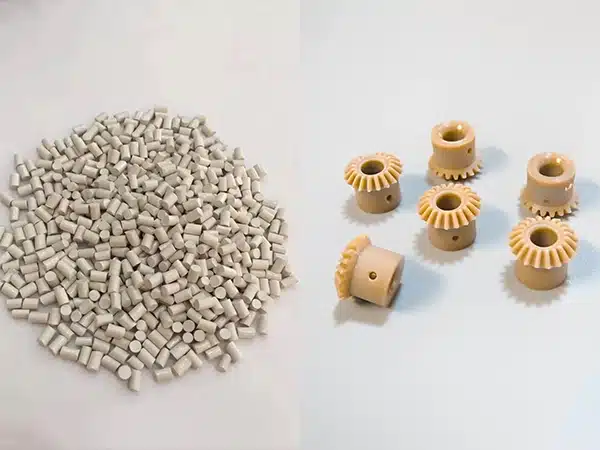
Injection Molding Materials
Injection Molding Materials
Choose the Right Material for Your Part
ZC Mould helps customers evaluate injection molding materials — including ABS, PP, PC, PA, POM, and PEEK — based on mechanical strength, heat resistance, surface finish requirements, dimensional stability, and production cost. The right material decision starts before the mold is cut.
Material Reference
Common Injection Molding Materials
The following materials represent the most widely used thermoplastics in industrial injection molding. Each has well-established processing characteristics, defined mechanical properties, and application profiles that have been validated across millions of production cycles.
| Material | Key Strengths | Limitations | Common Applications |
|---|---|---|---|
| ABS | Good rigidity, impact resistance, excellent surface finish | Moderate heat resistance, not UV stable without additives | Consumer electronics housings, automotive interior panels, enclosures |
| PP | Lightweight, chemical resistant, fatigue resistant, low cost | Lower stiffness, poor UV resistance, limited low-temperature performance | Packaging, industrial containers, living hinges, automotive components |
| PC | High impact strength, optical clarity, wide temperature range | Susceptible to scratching, higher cost, stress cracking under some chemicals | Safety visors, lenses, medical devices, electronic covers |
| PA (Nylon) | High strength, wear resistance, good thermal stability | Absorbs moisture, requires drying, dimensional changes with humidity | Gears, bushings, connectors, under-hood automotive parts |
| POM | Excellent dimensional stability, low friction, high stiffness | Poor acid resistance, high shrinkage rate, difficult to bond | Precision gears, bearings, fasteners, pump components |
| PMMA / Acrylic | Excellent optical clarity, good UV resistance, hard surface | Brittle under impact, susceptible to crazing | Display covers, light guides, optical lenses, signage |
| PEEK | Exceptional heat and chemical resistance, very high strength | High material and processing cost, requires high mold temperatures | Aerospace components, medical implants, semiconductor parts |
| PE | Chemical resistance, low friction, food-grade compatibility | Low stiffness, poor dimensional stability, high shrinkage | Containers, piping components, cutting boards, industrial liners |
Material Detail Overview
Acrylonitrile Butadiene Styrene
ABS is one of the most widely used engineering thermoplastics in injection molding. It combines rigid structure with good impact resistance and produces smooth, paint-ready surface finishes. ABS processes at moderate temperatures and is easy to mold with consistent results.
It is well suited for consumer electronics enclosures, automotive interior trim, and industrial housings where dimensional accuracy and surface quality are important. UV-stabilized grades are available for outdoor applications.
Polypropylene
PP is a highly versatile, low-density thermoplastic with excellent chemical resistance and natural fatigue tolerance. Its living hinge capability — the ability to flex repeatedly without failure — makes it valuable for integrated hinge designs.
PP is one of the most cost-effective materials available and is widely used in packaging, automotive components, and industrial containers. It is food-safe in standard grades and easy to process at high volumes.
Polycarbonate
Polycarbonate delivers outstanding impact resistance — significantly higher than most standard thermoplastics — combined with optical-grade transparency and broad temperature performance. PC maintains dimensional stability across a wide thermal range.
It is the preferred material for safety applications, transparent covers, optical devices, and medical equipment where mechanical robustness and clarity are both required. PC/ABS blends offer a cost-optimized alternative with improved processability.
Polyamide (Nylon)
Nylon grades (PA6, PA66, PA12) offer high tensile strength, excellent wear resistance, and good thermal stability. Glass-fiber reinforced variants significantly increase stiffness and dimensional performance, making PA suitable for structural and load-bearing parts.
Common applications include gears, slides, connectors, and under-hood automotive components. Moisture absorption must be managed during processing and part design to ensure dimensional predictability.
Polyoxymethylene (Acetal)
POM is the benchmark material for precision mechanical components requiring low friction, high stiffness, and tight dimensional control. It produces parts with excellent surface hardness and a naturally low coefficient of friction without lubrication.
POM is frequently specified for gears, cams, bushings, and sliding mechanisms in both industrial automation and consumer devices. Its dimensional stability makes it suitable for applications where tolerance consistency across batches is critical.
Polymethyl Methacrylate (Acrylic)
PMMA offers the highest optical clarity among common injection molding materials. Its light transmittance and UV stability make it the standard choice for display lenses, light guides, and transparent covers where appearance is a primary requirement.
PMMA is harder and more scratch resistant than PC but has lower impact resistance. It is widely used in signage, lighting applications, optical components, and cosmetic packaging where clarity and visual quality define the product.
Polyether Ether Ketone
PEEK is a high-performance engineering polymer used where standard thermoplastics cannot meet the demands of the application. It maintains structural integrity at temperatures up to 250°C and resists aggressive chemicals, steam, and radiation.
PEEK is specified for aerospace structural components, implantable medical devices, semiconductor handling equipment, and oil and gas downhole components. Its processing requirements — high mold temperatures and specialized equipment — reflect the demanding environments it is built to operate in.
Polyethylene
Polyethylene (HDPE, LDPE, UHMWPE) offers broad chemical resistance, low friction, and reliable food-contact compatibility. It is one of the most widely produced plastics globally and is highly suitable for containers, caps, industrial liners, and components that require chemical inertness.
UHMWPE grades provide significantly enhanced wear resistance and are used in industrial wear pads, guide rails, and cutting surfaces. Dimensional precision is more limited compared to engineering resins, but PE remains a cost-effective and practical choice for appropriate applications.
Decision Framework
How to Select the Right Injection Molding Material
Material selection is a multi-variable decision that balances performance requirements against manufacturing feasibility and cost. Understanding the six factors below allows engineers and procurement teams to evaluate candidate materials systematically, reducing late-stage design changes and production risk.
01
Mechanical Performance
Define the structural requirements of the part. Will it carry static loads, experience cyclic stress, or absorb impact energy? Tensile strength, flexural modulus, and impact resistance values determine the minimum acceptable material class. Reinforced grades (glass or carbon fiber) can extend the performance envelope of standard resins significantly.
02
Heat Resistance
The operating temperature range determines whether a standard thermoplastic, a heat-stabilized grade, or a high-performance resin like PEEK is required. Heat deflection temperature (HDT) and vicat softening point are the primary reference values. Parts near heat sources, engines, or electronics require careful thermal evaluation during the design phase.
03
Chemical Resistance
Identify the chemicals, solvents, fuels, or cleaning agents the part will contact during its service life. Many common thermoplastics are degraded by specific chemicals that may appear harmless. PP and PE offer broad chemical resistance; ABS and PC are vulnerable to certain solvents. Always verify chemical compatibility with published resin datasheets before final specification.
04
Surface Finish
Cosmetic parts require materials that mold cleanly, accept texture or gloss well, and remain stable without sink marks or surface defects. ABS and PC are preferred for high-appearance surfaces. For transparent or optically clear parts, PMMA or optical-grade PC should be evaluated. Mold finish grade and gate location also significantly influence the final appearance.
05
Dimensional Stability
Parts with tight tolerances or assembly-critical features require materials with predictable, low shrinkage rates. POM and glass-filled PA are known for dimensional consistency. Moisture-absorbing materials like unfilled PA must be evaluated carefully, as post-mold dimensional changes can affect fit and function in precision assemblies.
06
Cost and Volume
Material cost per kg and processability both affect the economics of a project. High-volume commodity parts favor PP, PE, or ABS for their cost efficiency. Lower-volume, high-performance parts may justify engineering resins such as PEEK or PEI. Mold design complexity and cycle time are also affected by material choice and should be considered as part of total cost evaluation.
Application Guidance
Recommended Materials by End Use
Application requirements determine material fit. The following end-use scenarios represent the most common selection decisions encountered in production projects, with primary material recommendations and the reasoning behind each choice.
Application
Low-Cost Consumer and Commodity Parts
Recommended: PP / PEPolypropylene and polyethylene offer excellent cost efficiency at high volumes. Both materials are easy to process, chemically resistant, and well-suited for parts where visual appearance is secondary to function and cost.
Application
Transparent and Optically Clear Parts
Recommended: PMMA / PCPMMA provides the highest optical clarity and UV stability, making it ideal for lenses and display covers. PC is preferred when impact resistance is also required, such as in safety shields or device screens.
Application
Wear-Resistant Moving and Sliding Parts
Recommended: POM / PAPOM and PA provide the combination of low friction, high stiffness, and dimensional stability required for gears, bushings, cams, and guide components. POM is preferred for tighter tolerances; glass-filled PA for higher load capacity.
Application
High-Temperature Applications
Recommended: PEEK / PA GFPEEK withstands continuous service temperatures up to 250°C and is the standard choice for demanding thermal environments. Glass-filled PA grades are a cost-effective alternative for moderate heat applications under 150°C.
Application
Chemically Exposed Parts
Recommended: PP / PEEK / PEPP and PE offer broad resistance to acids, bases, and common industrial chemicals at lower cost. PEEK handles aggressive chemical environments at elevated temperatures where PP and PE reach their performance limits.
Application
Cosmetic Housings and Covers
Recommended: ABS / PC-ABSABS produces clean, consistent surfaces that paint and coat well. PC/ABS blends improve impact resistance while retaining the surface quality and processability needed for high-appearance consumer and industrial enclosures.
Engineering Partnership
Material Selection Support from ZC Mould
ZC Mould does not simply process whatever resin name appears on a drawing. Every new project begins with a material review that considers the full context of the part — its geometry, tolerance requirements, cosmetic expectations, assembly conditions, and end-use environment.
This review is part of our standard project intake process. It allows us to identify potential processing challenges early, recommend alternative materials when appropriate, and coordinate mold design decisions that support consistent part quality across production runs.
What We Review Before Mold Cutting
- Part geometry and wall thickness distribution
- Dimensional tolerance expectations
- Surface finish and cosmetic requirements
- Assembly and joining conditions
- End-use environment and service life
Project Support Capabilities
- Material evaluation and specification discussion
- Mold design coordination and DFM review
- CNC-machined precision mold components
- T1 sampling and dimensional verification
- Mass production with documented process parameters