Materials Guide for CNC Machining

CNC Machining Materials for Precision Custom Parts

Choosing the right CNC machining material is essential for part performance, dimensional stability, wear resistance, corrosion behavior, weight, and overall manufacturing cost. At ZC Mould, we support a wide range of CNC metal and plastic materials for precision machined parts used in automotive, electronics, medical, industrial, and tooling applications.

Materials Supported Metals & Engineering Plastics
Standards GB / JIS / DIN / AISI
Industries Served Automotive · Medical · Electronics
Overview

Introduction

Selecting the right material is one of the most important steps in any CNC machining project. The same geometry can perform very differently depending on whether the part is made from aluminum, stainless steel, brass, titanium, POM, nylon, or another engineering material.

Material choice affects not only strength and corrosion resistance, but also machinability, surface finish, dimensional consistency, lead time, and budget. For this reason, CNC material selection should always be based on the part's working environment, tolerance requirements, functional loads, and end-use expectations.

At ZC Mould, we help customers evaluate both metals and plastics for precision CNC machined parts. Whether you need lightweight structural components, wear-resistant machine parts, conductive metal components, or stable engineering plastic parts, our team can recommend suitable material options based on drawings, tolerances, and application requirements.

Material Selection

How to Choose the Right CNC Machining Material

There is no single "best" CNC machining material for every project. A good material choice is usually a balance between mechanical properties, machinability, cost, availability, and the real operating conditions of the final part.

01

Strength and Hardness

Choose materials that can handle the required loads, pressure, and structural demands of the final part.

02

Corrosion Resistance

Consider moisture, chemicals, cleaning processes, and the actual operating environment.

03

Wear Resistance

Sliding, repeated contact, and moving assemblies often require materials with better wear performance.

04

Weight

For lightweight assemblies or portable products, reducing part weight may be a priority.

05

Machinability

Some materials are faster and more cost-effective to machine, while others require more time and tool control.

06

Cost and Production Volume

Material price, machining time, and production quantity should all be reviewed together during selection.

For example, aluminum is often selected for lightweight parts with good machinability, stainless steel is preferred for corrosion resistance and durability, brass and copper are useful where conductivity is important, and high-performance plastics such as PEEK or POM are often chosen for low-friction or chemically resistant applications.

Metal Materials

CNC Metal Materials

Metal materials are widely used for CNC machined parts that require structural strength, durability, heat resistance, conductivity, or long-term mechanical reliability.

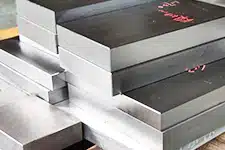
Aluminum

Aluminum is one of the most popular CNC machining materials because it offers a strong combination of low weight, good machinability, corrosion resistance, and cost efficiency. It is commonly used for housings, brackets, fixtures, prototypes, heat sinks, and precision components in electronics, aerospace, automation, and general industrial applications.

Typical Applications:Housings, brackets, mounting plates, jigs, fixtures, machine parts.

Stainless Steel

Stainless steel is commonly used when corrosion resistance, strength, and long-term durability are critical. It is a reliable choice for precision shafts, medical components, industrial fittings, machine parts, and components exposed to moisture, chemicals, or repeated cleaning.

Typical Applications:Shafts, fittings, valves, medical parts, food equipment parts, structural components.

Carbon Steel and Alloy Steel

Carbon steel and alloy steel are widely used for parts that need strength, toughness, and dependable mechanical performance. These materials are often selected for industrial machine parts, tooling-related components, support parts, and applications where higher load capacity matters more than corrosion resistance.

Typical Applications:Machine parts, tooling components, support structures, wear parts, industrial assemblies.

Brass

Brass is valued for its good machinability, stable cutting behavior, corrosion resistance, and electrical conductivity. It is often used for connectors, fittings, valve components, bushings, and decorative or precision parts that benefit from clean machining results.

Typical Applications:Fittings, connectors, valve parts, bushings, inserts, terminals.

Titanium

Titanium is chosen for demanding applications that require a high strength-to-weight ratio, corrosion resistance, and strong performance in harsh environments. It is commonly used in aerospace, medical, and high-performance industrial applications.

Typical Applications:Aerospace parts, medical components, lightweight structural parts, high-performance assemblies.
Plastic Materials

CNC Plastic Materials

Plastic materials are widely used in CNC machining when parts need low weight, electrical insulation, chemical resistance, low friction, or dimensional stability without the weight and conductivity of metal.

POM / Delrin

POM is a popular engineering plastic for CNC machining because it offers good dimensional stability, low friction, and reliable machinability. It is widely used for precision plastic parts that require smooth movement, tight tolerances, and consistent performance.

Typical Applications:Bushings, rollers, guides, insulators, wear parts, precision plastic components.

Nylon

Nylon is often used for machined plastic parts that require toughness, wear resistance, and a balance between strength and flexibility. It is commonly used in industrial and mechanical applications where impact resistance and functional performance are more important than cosmetic appearance.

Typical Applications:Wear pads, gears, guides, machine parts, insulators.

PTFE

PTFE is valued for its chemical resistance, low friction, and non-stick properties. It is often used in sealing, sliding, and chemically exposed applications where conventional plastics may not perform as well.

Typical Applications:Seals, rings, insulating parts, chemical handling components, low-friction parts.

PEEK

PEEK is a high-performance engineering plastic known for excellent mechanical properties, chemical resistance, and the ability to retain performance at elevated temperatures. It is frequently used in advanced applications where standard plastics cannot meet thermal or mechanical demands.

Typical Applications:High-temperature parts, medical components, insulating parts, precision engineering components.

ABS

ABS is a practical plastic for prototypes, covers, housings, and general-purpose machined parts. It is often selected when moderate strength, easy processing, and cost control are important.

Typical Applications:Prototype parts, housings, covers, consumer product components.

Acrylic / PMMA

Acrylic is commonly used when optical clarity, visual quality, or transparent part requirements are important. It is often selected for covers, display parts, windows, and transparent functional components.

Typical Applications:Transparent covers, display parts, windows, protective panels.
Quick Reference

Material Comparison Table

The table below gives a practical overview of common CNC machining materials and the types of applications they are generally suited for.

MaterialTypeMain AdvantageCommon Applications
AluminumMetalLightweight and easy to machineHousings, brackets, fixtures, precision parts
Stainless SteelMetalCorrosion resistance and durabilityShafts, fittings, medical and industrial parts
SteelMetalStrength and toughnessMachine parts, tooling parts, industrial components
BrassMetalGood machinability and conductivityConnectors, fittings, valve parts
TitaniumMetalHigh strength-to-weight ratioAerospace, medical, high-performance parts
POMPlasticDimensional stability and low frictionBushings, rollers, guides, precision plastic parts
NylonPlasticToughness and wear resistanceGears, wear pads, machine parts
PTFEPlasticChemical resistance and low frictionSeals, rings, chemical handling components
PEEKPlasticHigh temperature and chemical resistanceMedical, aerospace, advanced engineering parts
ABSPlasticPractical and cost-effective for general usePrototype parts, housings, covers
AcrylicPlasticTransparency and visual qualityWindows, covers, display parts
By Industry

Material Selection by Application

Different industries and part functions often point to different material priorities. A material that is ideal for one environment may be the wrong choice for another.

Automotive

Automotive components often require a balance of strength, wear resistance, dimensional consistency, and cost efficiency.

Electronics

Electronics parts may prioritize lightweight structures, conductivity, insulation, and precision machining quality.

Medical

Medical applications usually demand tighter tolerances, clean finishes, corrosion resistance, and dependable material performance.

Industrial Automation

Industrial automation parts often require durability, wear resistance, dimensional stability, and reliable long-term operation.

If your part is still in development, material selection should be reviewed together with geometry, tolerances, and production quantity. In many cases, choosing the right material early can reduce machining difficulty, improve part consistency, and avoid unnecessary cost later in the project.

Our Capabilities

Why Work with ZC Mould

At ZC Mould, we manufacture precision mold components, CNC machined parts, and custom industrial components for global customers across automotive, electronics, medical, plastics, and industrial automation sectors.

We understand that material selection is not only about a datasheet. In real projects, the right CNC machining material must also match machining feasibility, tolerance requirements, surface finish expectations, assembly conditions, and overall cost targets.

Our team can support customers with:

  • Material recommendation based on drawings and applications
  • CNC machining of both metals and engineering plastics
  • Precision components with tight tolerances
  • Support for prototypes, custom parts, and production projects
  • Engineering communication for manufacturability and material trade-offs
Request a Quote
Common Questions

FAQ

What materials can be used for CNC machining? +

CNC machining can be used with a wide range of metals and plastics. Common options include aluminum, stainless steel, steel, brass, copper, titanium, POM, nylon, PTFE, PEEK, ABS, and acrylic, although actual availability depends on supplier capability and project requirements.

What is the best metal for CNC machined parts? +

There is no universal best metal for all CNC parts. Aluminum is often preferred for lightweight and machinability, stainless steel for corrosion resistance, steel for strength, brass for machinability and conductivity, and titanium for high-performance applications.

What plastics are suitable for CNC machining? +

Many engineering plastics are suitable for CNC machining, including POM, nylon, PTFE, PEEK, ABS, and acrylic. The best choice depends on whether the part needs low friction, heat resistance, chemical resistance, insulation, toughness, or optical clarity.

How do I choose between aluminum and stainless steel? +

Aluminum is usually better when low weight and easy machining are priorities, while stainless steel is more suitable when corrosion resistance and durability are more important. The final decision should be based on the part's environment, loading conditions, tolerance needs, and budget.

Is PEEK suitable for precision CNC machining? +

Yes. PEEK is widely used for precision CNC machined parts in demanding applications because it offers strong mechanical performance, chemical resistance, and excellent behavior at elevated temperatures.

Can you help select material based on my drawing?
Get in Touch

Need Help Choosing the Right CNC Machining Material?

If you are comparing aluminum, stainless steel, brass, steel, titanium, or engineering plastics for a custom part, our team can help you review the best option based on performance, tolerance, and cost.

Home / cnc materials

CNC Machining Materials | Substrates for Milling & Turning Applications

In industrial CNC machining, metals, plastics and composite materials are only some of the options used. Precise CNC machining is used to make these materials into parts that fit the complicated designs required in many industrial sectors.

An NDA can be signed if needed before the quotation.

What Can be CNC machined

CNC Machining Materials Classification

With many years of completed CNC machining jobs, ZCmould understands how to handle CNC materials in different conditions. We have sorted our CNC-based materials into clear groups so that our customers find them easier to select. Our capability as a reliable guide for direction comes from our expertise in material properties, built over a long period by similar projects.

CNC Machining Materials Comparison Chart

Material Density(g/m³) Tensile Strength(Mpa) Yield Strength(Mpa) Hardness(HB) Machinability Applications
Aluminum 6061
2.7
276
241
95
Excellent
General-purpose, structural parts, jigs, fixtures
Aluminum 7075
2.8
572
503
150
Good
High-strength parts, aerospace applications
Brass
8.5
345-550
75-450
90-140
Excellent
Decorative parts, fittings, hardware
Copper
8.9
220
70
100
Excellent
Electrical components, heat exchangers
Mild Steel
7.85
400-550
250
120
Good
General fabrication, structural components
Stainless Steel (304)
8.0
515
215
200
Moderate
Food-grade parts, chemical resistance, marine applications
Stainless Steel (316)
8.0
535
205
210
Moderate
High temperature and corrosion resistance
Tool Steel
7.8 – 8.5
600-3000
400-2500
400-700
Fair
Molds, dies, cutting tools
Inconel (Nickel Alloy)
8.8
758
483
230
Difficult
High-temperature applications, corrosion resistance
Titanium
4.5
950
880
36 HRC
Difficult
Aerospace parts, medical implants, high-performance applications
ABS
1.05
40-50
40
75R
Excellent
Prototypes, enclosures, consumer goods
PMMA
1.18
70
70
M70
Excellent
Signs, displays, optical parts
POM
1.42
63
63
R120
Excellent
Bushings, gears, precision parts
PC
1.2
PC
60-70
60-70
M70
Excellent
Impact-resistant parts, safety shields, enclosures
滚动至顶部