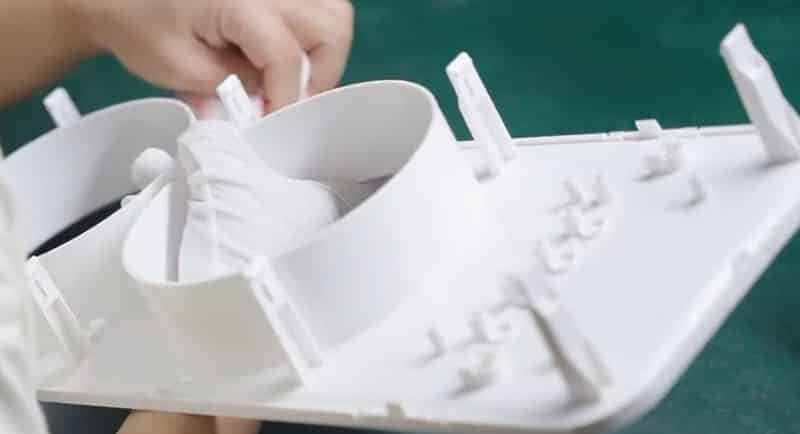
Manufacturing cost issues in the injection molding operations are often related to the mold design decisions early in the project. These problems are not accidental; they are based on the choices of not considering any long-term consequences, i.e., the dynamics of material flow or cooling efficiency, resulting in inefficiencies, which swell costs with time. There is a common myth that the price of manufacturing products depends mostly on the material prices or machine hourly wages, but in the actual sense, the determination of the cost structure is usually determined at an early stage by the mold design.
Ineffective design of the mold will not raise cost in a single step- it sets in train the chain of latent costs, often rooted in common design and manufacturing mistakes, whose cost is gathered during tooling, trials, and production. Not only part quality is determined by mold design decisions, but also long-term cost efficiency of manufacturing. Through these linkages, engineers would be in a better position to predict areas where savings would be lost to overruns and rather focus on the holistic approaches that focus on overall ownership costs as opposed to pricing at the beginning. Partnering with specialists in injection mold design and manufacturing makes it easier to align design decisions with long-term cost control instead of short-term quotes.
Why Mold Design Is a Hidden Cost Driver in Manufacturing
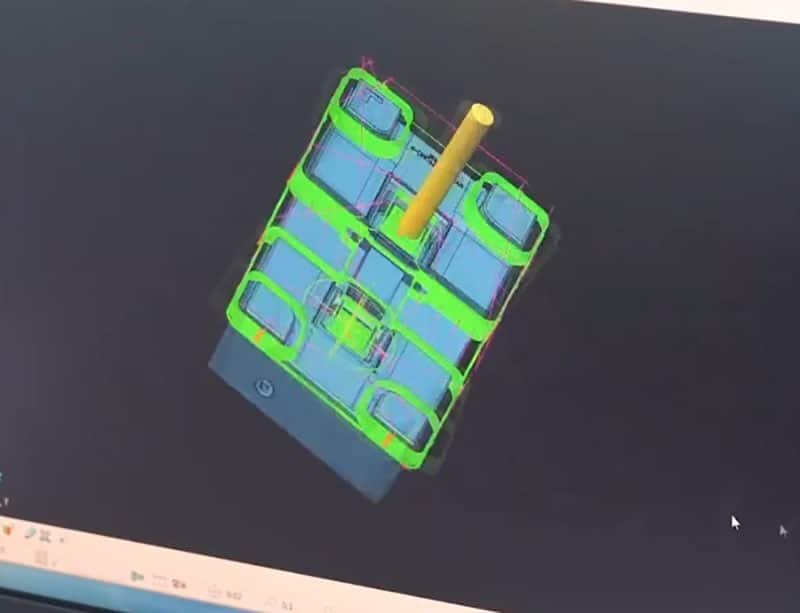
Mold design is the silent inflation factor of manufacturing cost, which is not usually obvious until the scales are increased. The apparent cost of the tooling (i. e. the cost to create the mold itself) is just a small percentage of the overall cost, and the hidden cost of production is revealed in the inefficiencies in cycle times or in the frequent maintenance requirements.
These costs associated with design emerge over time as early design-based errors, like poor gating designs, do not stop the process at once, but grow exponentially in scrap rates and downtimes. My years of experience with tooling programs have made me witness how insignificantly simple design mistakes may escalate the cost of operation two or three times.To mitigate this, integrating robust injection mold design and manufacturing practices early on helps reveal potential pitfalls before they become embedded in the process.
How Poor Design Increases Tooling and Rework Costs
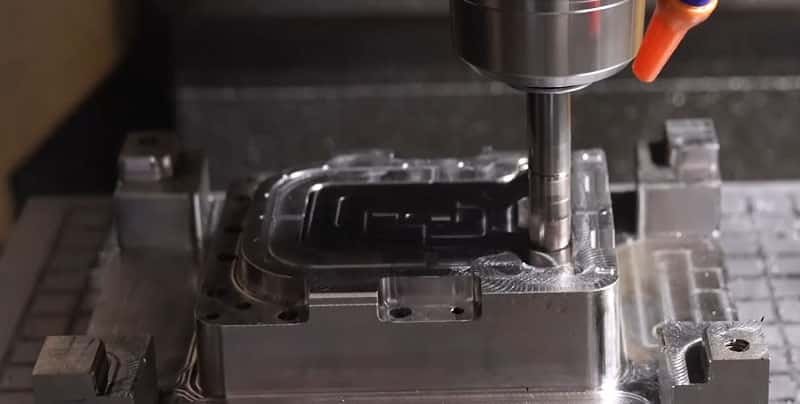
Ineffective design of the molds also increases the tooling costs directly as a result of the choice to rework them; focusing on how to reduce mold modification and rework during production with more careful design effort is far more cost-effective. Weaknesses such as poor venting or unsynchronized ejectors can easily mean steel rework, whether by machining, welding or even full rework, which can contribute significant labor and material expenses.
These reworks have the cost implication of downtime, during which the production process is put on hold waiting to facilitate changes, and this interferes with schedules and swells overhead. In high volume situations, such interruptions can include thousands of lost productivity per day. Understanding the mold design impact on quality and cost already during the quoting phase is essential to forecast these risks accurately, instead of discovering them only after tooling is built.
Mold Defects as Cost Multipliers, Not Isolated Issues
Molded part defects are multipliers of cost since they create a chain reaction of other expenditures, other than the defective part itself. As an example, flash or sink marks require additional inspection and sorting work, whereas major problems cause whole batches to be scrapped, which has a direct impact on the cost of materials.
These flaws are hardly ever one-time only; they are indicators of poor design choices, like uneven wall thicknesses or bad cooling patterns, which continue to propagate inefficiencies across production runs. Reactive solutions only increase the burden of mold design cost and turn one issue into ongoing quality-control expenses. Proven strategies for handling mold defects caused by poor design emphasize simulation tools and upfront design reviews to predict and prevent these outcomes.
| Defect Type | Immediate Cost | Long-Term Cost |
| Flash | Trimming labor | Tool wear |
| Warpage | Scrap | Customer complaints |
| Short shots | Re-runs | Schedule delays |
This table depicts the interconnectedness of individual defects to larger financial drainages, and thus the necessity of scrutinizing the design as a way of breaking the cycles.
Repeated Mold Trials and Their Escalating Cost Impact
Mold Trials Repeat and the Cost Escalation.
Recurring cases of mold trials is a major increase in the production cost, a trap often avoided when choosing the right precision mold from the start since every time a case is done, it burns more than mere time in the process. Trials consist of equipment setting up, use of materials, and time spent by the engineers, and expenses multiplied in an event where a trial shows that there are underlying design concerns that will need further changes.

In addition to the direct costs, trials cause delays in project timelines, resulting in products being delivered late and capital tied up in unfinished stock. Historically, cost analysis of several OEM projects shows that two or more extra trials are often a sign of inherent design defects, and in such cases the cost drivers of the injection mold increase exponentially. Effective management of repeated mold trials and rework relies on data‑driven validations and clear acceptance criteria to minimize these loops.
| Trial Iterations | Cost Impact | Risk Level |
| T1–T2 | Low | Acceptable |
| T3–T4 | Medium | Schedule risk |
| T5+ | High | Program failure |
As observed, the increased number of trials is associated with the increased risks, which explains the necessity of design accuracy to limit the number of iterations as soon as possible.
Short-Term Tooling Savings vs Total Cost of Ownership
The choice of short-term savings of tooling by simplified designing favors always backfires by increasing the total ownership cost in the life of the tool. Low startup quotes may be attractive as they will save on the start-up capital, but they often cover the flaws which would translate into the increased cost of maintaining, repairing, and inefficiency in the future.
The difference between tooling cost and lifecycle cost is essential: the former includes fabrication, whereas the latter involves all the aspects of energy consumption and losses in yield. It has been proven that the molds that have strong features such as optimised cooling channels will have lower per-part costs although preliminary prices may be higher, since they can support rapid cycles and reduced interruptions. This approach changes assessments and instant bids to long-term sustainability to escape the pitfall of cost increase in manufacture.
| Decision Focus | Short-Term Result | Long-Term Outcome |
| Cheap mold design | Lower quote | Higher operating cost |
| Robust design | Higher upfront | Lower total cost |
This comparison reveals how initial choices reverberate, favoring investments in quality to curb overall expenditures.
How OEMs Should Evaluate Mold Design From a Cost Perspective
OEMs need to think cost per part when thinking about the design of the moulds, and calculate not only purchase but also production costs per unit made. This will entail evaluation of such variables as the efficiency in terms of cycle-time and defect to estimate the real economics through the projected life of the mold.
The design risk assessment is critical and determines the possible failure modes with the help of such a tool as the failure mode and effects analysis (FMEA) to measure the likely cost. Supplier assessments must investigate design capabilities, checking previous programs for evidence of economic outcomes instead of just basic conformity. Selecting a custom mold manufacturing partner helps operations managers align tooling choices with efficiency targets and long‑term profitability, rather than being surprised by hidden rework expenses later.
Common Cost Misunderstandings Related to Mold Design
The most common misconception is that the quality of design flows has little to do with the unit costs, which is actually directly related to yield and throughput, which are the determinants of the per-piece costs. Questions regarding defects are commonly counted as regular production variances but in many instances they are as a result of preventable design defects that may be designed out.
The next mistake is that it is assumed that costs can be optimized after design without giving attention to the fact that early decisions entrap inefficiencies that are very expensive to rectify. Such incorrect assumptions keep repeating the rounds of reactionary expenditure, in which imbalance in tooling cost/ production cost occurs and is not corrected until budgets explode.These misunderstandings often ignore why mold quality matters in injection molding production, where design choices directly shape yields, throughput, and per‑piece cost.
Conclusion — Poor Design Is the Most Expensive Choice
Finally, ineffective mold design adds to the manufacturing cost by creating a network of interrelated inefficiencies that cumulate throughout the design process and carry on in the large-scale production. The teams by noting that the cost issues are caused at the design phase can give preventive focus to the problems by ensuring that the cost problems are prevented through the extensive simulations and cross-functional reviews. This strategy puts more emphasis on correction at the earliest stage where corrections are least costly rather than downstream solutions that increase losses. Essentially, investing in sound design is not the additional cost- it is the cornerstone to control the cost structure out of the whole cost structure and make sure that the cost structure operates effectively and at a healthy cost.If you are reviewing an existing mold design or planning a new tool and want to avoid these hidden cost traps, you can contact our engineering team to review gating, cooling, and risk areas before steel is cut.