When it comes to the injection mold manufacturing industry, the buyers also want a simple solution to the question of the lead time, they want only one single number that would work in all cases. Nevertheless, the times of mould cannot be downgraded to one definite number since it is influenced by a plethora of interacting elements, starting with the initial design requirements up to the trial validation. The significance of what is considered a typical lead time is the awareness of the stages which make it up, design, machining, assembly and trials, each contributing randomly depending on the scope of the project. There is the widespread misperception that, when using the dominant machining speed alone, mold lead time is largely determined by the slowest machining speed but in actual practice; design preparedness and stability in the trial often control the total schedule many times to far exceed original expectations.
Mold predictable lead time relies more on process coordination than on a manufacturing speed of an individual. Mold lead time is the cumulative figure of design choices, sequence of the processes, and trial preparation- not a set figure quoted at the beginning. This simulated structure will guarantee that OEMs and project managers are able to remodel the expectations based on the reality of the manufacturing picture and minimize the occurrence of surprises and amplify the project control.
What “Typical Lead Time” Really Means in Custom Mold Making
The perception of typical lead time demands that one views it as a loose structure instead of a strict commitment. In custom mold making, the lead time quoted is a rough estimate of the information at hand, and the actual delivery preparedness of the entire process of concept to a tool capable of production. This is the difference as unexpected changes that occur in the process may cause the timelines to change and it is important to consider lead time as a progressive timeline in which one stage gives birth to the next.
Breaking Down the Staged Timeline
A staged timeline is a manufacturing timeline of injection mold that is divided into distinct parts: design, material procurement, machining, assembly, and trials custom mold making services . This point of view aids the tooling lead time factor to be visible because the delay at one stage causes ripple effect on other stages. As an example, when the design cycles take longer than anticipated, other stages such as machining cannot be performed efficiently which makes the total custom mold lead time to inflate.
In order to handle this, the OEM manufacturing engineers are supposed to deal with suppliers that focus on transparency in the services of custom mold making. This type of collaboration can be used to predict the schedule of the project being undertaken in the mould making better, so that the projected lead times are based on reality, and not for the best.
How Tooling Intent Defines the Overall Lead Time Framework
The proposed purpose of the tooling essentially determines the priorities of the scheduling and the lead time. The level of detail, durability requirements and validation required in tooling whether prototyping or full scale production depends on the tooling intent, which in turn affects the timeline of a mold delivery.
Prototype vs. Production Tooling Differences
Prototype tooling may be of simpler design, using fewer iterations and may have a shorter lead time of 4-8 weeks in simple systems. By contrast, production tooling requires strict, long-term, engineering-to-last and machine-engineering, so the timelines will be 12-20 weeks or more because of material choices and thorough testing. This disparity underscores the reason why the rush to develop production-intent tools may affect quality because the production tooling development schedule focuses on the strength rather than speed.
When project managers clarify tooling intent early, it is possible to avoid inappropriate expectations and optimize the schedule of a project on mold making to create a balance between urgency and reliability production tooling development timeline.
Mold Design Phase as the First Major Lead Time Driver
Partial or non-finalized designs will always be the main restriction when it comes to the customization of the lead time of molding. The design stage establishes a framework to which all other phases depend and and any confusion at this stage will increase risks in future and what might have been a foreseeable timeline becomes one rife with revisions.
Key Elements Influencing Design Lead Time
Complexity in the design e.g. complex geometries or multi-cavity designs take longer periods to be CAD modeled and simulated, which has a direct effect on the injection mold manufacturing schedule. Besides, in case of any alteration of part specifications during the process, as a result of engineering feedback or regulatory changes, the whole schedule is restarted, which contributes to the weeks to the mold delivery schedule.
The impact of this phase highlights the importance of dealing with the complexity of the mold design and lead time in advance mold design complexity and lead time, so that the design is frozen in detail to reduce the rework.
Design Readiness vs Lead Time Impact
| Design Status | Impact on Lead Time | Risk Level |
| Fully defined | Predictable | Low |
| Partially defined | Revisions likely | Medium |
| Unstable | Rework cycles | High |
A completely defined design allows easier creation of flow and unstable ones have high-risk delays that impact the total factors of tooling lead time as indicated in the table.
CNC Machining and EDM Scheduling in Mold Manufacturing
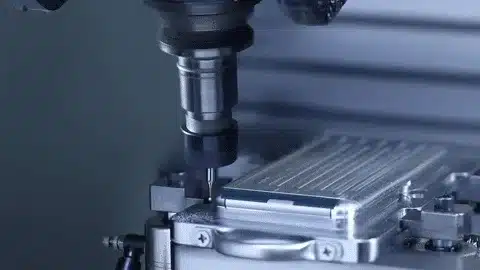
Machining time is important but it is not a large portion of the overall lead time and is often dwarfed by queueing and set up preparations. Precision mold making CNC machining and EDM (Electrical Discharge Machining) can be planned between any operation, with capacity limitations which can cause variation in the lead time of custom molds.
Factors Affecting Machining Schedules
Machining Core and cavity parts usually take between 2-6 weeks depending on the material hardness and accuracy of features. But the actual time save comes with queue management; as the workload that a supplier has works its way up even smooth running processes can be slowed down. Tooling designers have to take these realities into consideration when schedule the project of making the molds.
Buffer periods are incorporated in effective CNC machining and EDM scheduling so that machining is identical to upstream design outputs and downstream assembly requirements to accommodate such variations.
Mitigating Machining Delays
To mitigate risks, OEMs can ask milestones to provide updates on the availability of machines to avoid the bottlenecks that swell the injection mold production schedule.
Mold Assembly and Trial Readiness as Schedule Risk Points
The assembly and the trial stages often identify the differences that were hidden in the previous stages, so they are the critical risk points in terms of the lead time extension. These are the steps which bring the theoretical designs into working tools, whereby real performance testing of the design exposes such problems as misalignment or ejection.
Assembly Challenges and Their Timeline Effects
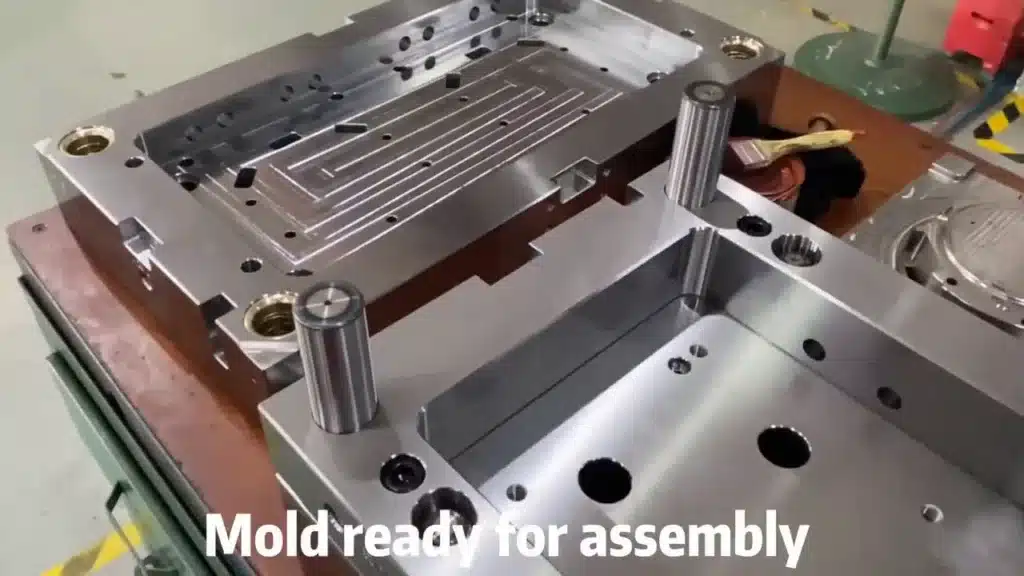
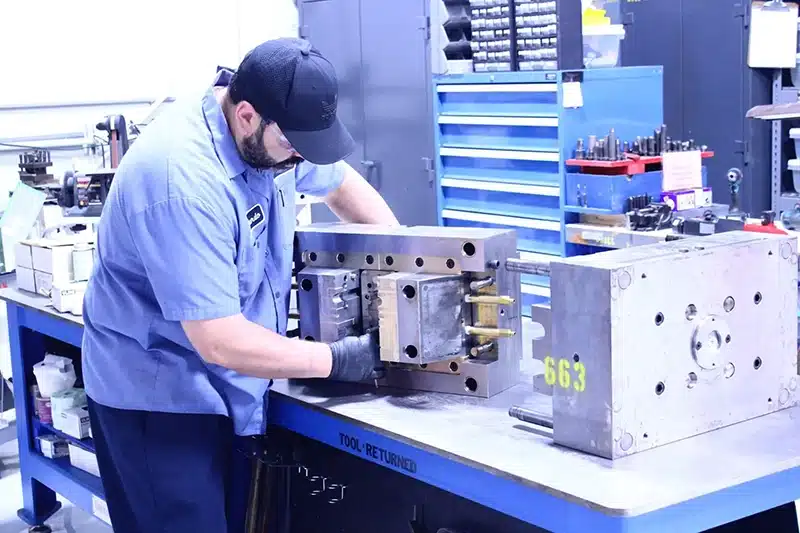
Components are produced during assembly where they are fitted and polished and this process may take 1-3 weeks, but is sometimes prolonged when machining tolerances are not met. Trial readiness is followed by repetitive testing to attain constant part production which is critical in declaring the mold as ready.
That is why it is important to know more about the number ofmold trial iterations and lead time and lead time: several circles can bring the addition of 2-4 weeks and it is necessary to perform numerous pre-trial inspections to protect the mold delivery schedule.
Strategies for Trial Efficiency
The use of simulation tools at the early stage can decrease the number of trial loops in a team and increase the predictability of tooling lead time factors.
Lead Time and Tooling Cost Trade-Offs
Efforts to reduce lead times inevitably generate cost increases because of the shifts in resources or speedy operations. The balance between cost, quality, and delivery creates a classical triangle in mold making, in which making a trade off between the other two is likely to result in undermining of the third.
Balancing the Trade-Offs
As an example, overtime can boost machining speed, which can raise the cost of labor, whereas validations can be bypassed, which can reduce initial costs, but may increase the quality risks. OEM buying managers should consider these dynamics when determining injecting manufacturing schedule.
The discussion of thelead time and tooling cost trade-offs will show that sustainable cuts are provided by optimizing processes instead of accelerations imposed.
Lead Time Reduction vs Trade-Offs
| Lead Time Strategy | Cost Impact | Quality Risk |
| Overtime machining | High | Medium |
| Parallel processes | Medium | Low |
| Skipped validation | Low | High |
The table reveals that strategies such as parallel processing have balanced advantages that reduce interruption by the custom mold lead time at the lowest possible costs.
Common Causes of Mold Lead Time Delays
Latencies in mold cause most delay effecting factors in project planning to be controllable but unnoticed. Design changes that occur late, such as those, result in revisions through phases and trial efforts underestimated that end up taking long debugging periods.
Identifying and Addressing Delays
Mismatch between capacity of supplier and demand may cause bottlenecking machining and assembly when the demand is higher than the available resources. Also, sourcing problems with materials or lack of communication between the OEMs and manufacturers inhibit these problems and make what would be a regular mold making project timeline into an uncertain one.
The ability to predict such pitfalls will enable program managers to add buffers to the tooling lead time aspects, a factor that will help create a more resilient schedule.
How OEMs Can Manage Mold Lead Time Realistically
The key to management of the lead times on mold is to first align the expectations on the project with the intended lifecycle and complexity of the tooling. Milestone-based monitoring should be the focus of OEMs in order to monitor progress against the injection mold manufacturing timeline.
Practical Management Approaches
Keeping designs at optimum levels eliminates the effect of cascading changes, whereas frequent supplier check-ins makes sure that their problems are dealt with as soon as possible. This is a disciplined method that enables mechanical engineers to manage risks, whereby the custom mold lead time is more predictable.
The emphasis on the teamwork and evidence-based changes, instead of the aggressive deadlines, can ensure the quality of the entire delivery of the molds timeline.
Conclusion — Predictable Lead Time Is Engineered, Not Promised
In short, dependable lead time of molds arises out of a disciplined approach to mold design, manufacturing and trial process with each process being handled with forethought to reduce risks. With this perception, OEMs obtain a higher level of predictability in their custom mold making undertakings, as they are more focused on coordination and completeness rather than pace. Finally, a properly designed process provides not only the tools on time but also the tools that are strong and can guarantee the popularity of production in the long term without the traps of hurried promises.