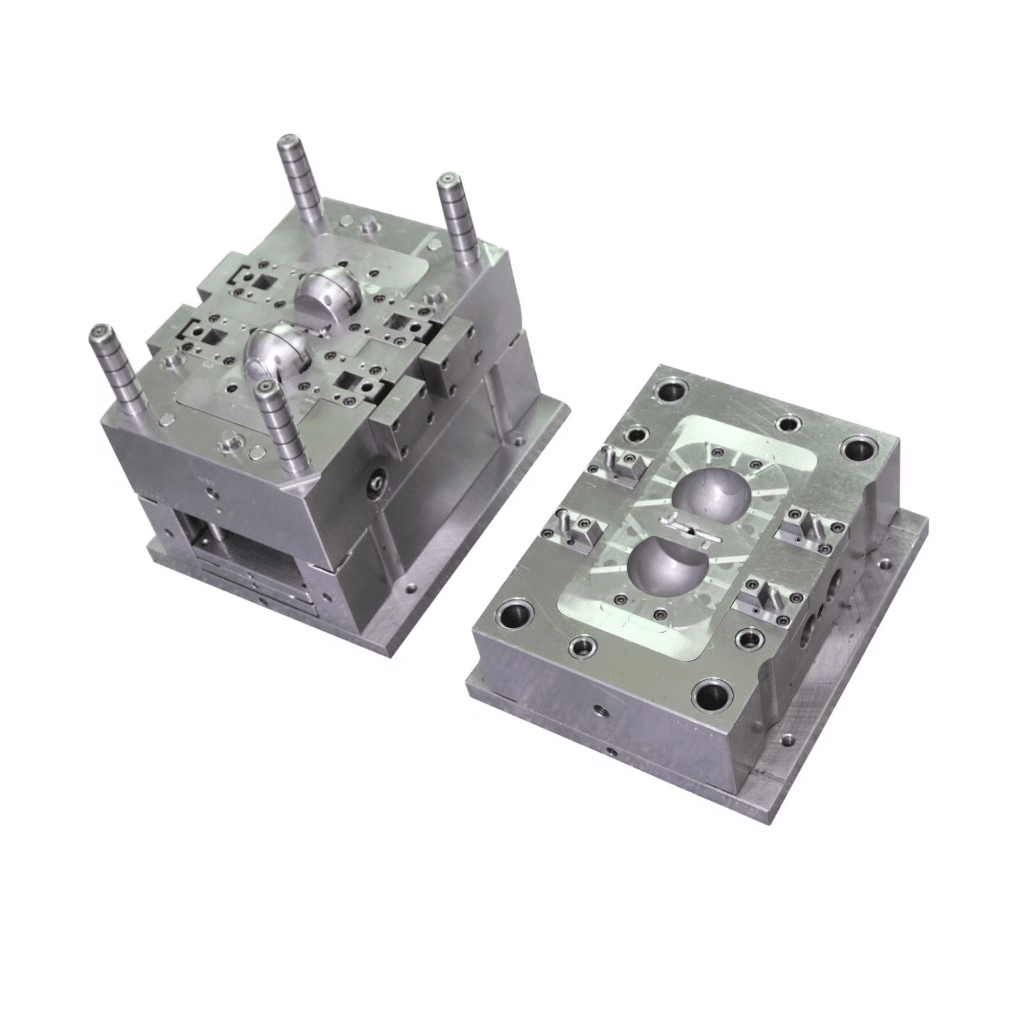
The idea of a cheap mold is deceptive in the sense that it only emphasizes the initial cost of purchase, yet does not put into consideration the wider scope of the concept of production efficiency and reliability. Most purchasers think that a low mold price results in the cost of the entire project being lower when in actual sense, the price tends to transfer the cost to such aspects as maintenance, downtime, and quality losses. The cost of injection mould is not to be considered upon the cost of purchase but on the total life of production.
Low-cost injection molds may be more expensive over time since they are not efficient; they are made less stable, less durable, and less lifecycle. This fundamental point is the result of decades of experience with tooling programs in which low-cost decisions in the beginning resulted in the increased costs of operation. Working as a tooling program manager where I have previously worked in sourcing of automotive and electronic OEMs, I have seen that focusing on immediate savings can lead to compromising long design objectives.
Why Low Mold Prices Are Appealing—but Incomplete
The low price of molds seems like a simple victory by the procurement departments but these prices seldom portray the entire economic nature of having tooling. The short-term goals of procurement managers are usually reduced capital spending, whereby, due to budget limitations and quarterly expectations, there is emphasis on short-term savings instead of long-term performance indicators. This emphasis on initial cost visibility has produced a blind spot: initial quotations do not reflect variables such as the life of the mould, or frequency of repair, or integration difficulties that will arise when the product is produced in large quantities.
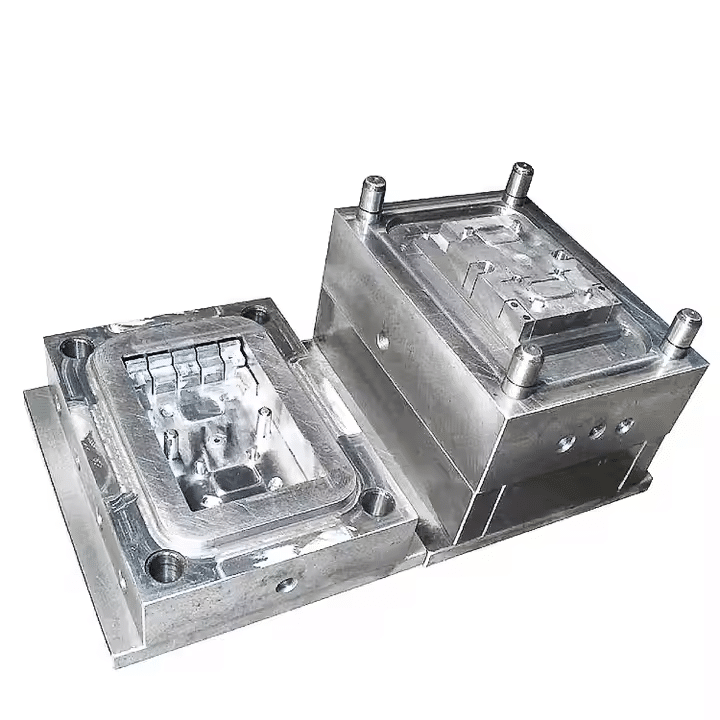
As an example, in sourcing high volume of run molds, what looks like a cheaply priced mold may not fit well with the existing injection systems and as such, there may be unexpected modification that adds to the overall injection mold lifecycle cost. It is typical that teams fail to account on these aspects since they are not quantified in the original bid. They rather come out later as an inefficiency in operations. To prevent this it is possible to think about collaboration with suppliers having experience in professional injection mold manufacturing where there is transparency in quote including lifecycle projections.
Production Tooling vs Short-Term Tooling Cost Structures
Sustained, high-volume output production tooling is designed to justify the high initial investment with long life and may be of high quality, but short-term tooling is concerned with speed and low cost at the cost of life. The most important distinction is in lifecycle purpose: production molds are made to withstand millions of cycles using durable materials and high-precision engineering, whereas short-term solutions trim corners to reduce delivery time on prototypes or when only a small run is required.
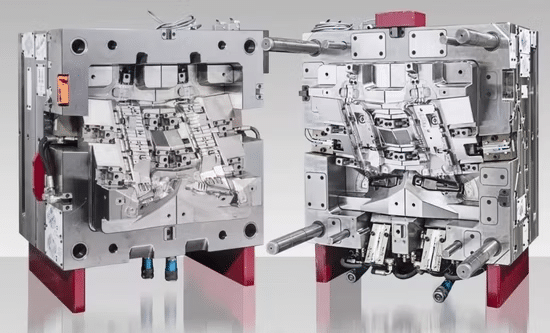
The difference has a direct effect on the tooling long-term cost. Short term molds may be good enough to do primary tests but fail to sustain pressure on action repetitions resulting in frequent replacement. Production tooling, on the contrary, recovers its larger initial cost over a further service life, and per-part costs are lower. It is important to comprehend the difference between production tooling and short-term tooling in order to match the choice of the mold to your volume and quality requirements of your production production tooling vs short-term tooling.
Tooling Type vs Long-Term Cost
| Tooling Type | Upfront Cost | Maintenance Cost | Tool Life |
| Short-term tooling | Low | High | Limited |
| Production tooling | Higher | Lower | Long |
This table shows how savings gained in short-term tooling may be corroded by the high costs incurred on an ongoing basis and how production mold investment is a more foreseeable option when dealing with scaled operations.
Where Cheap Injection Molds Actually Cut Costs
The low cost of cheap injection molds is mainly achieved by sacrifices in quality of materials and rigorousness in manufacturing, which may seem cost efficient but in most cases compromises on the reliability of performance. The suppliers save costs by using lower grade steels or alloy, which wear easier when subjected to heat and pressure without going through complex heat treatments, which increase its strength.
Also, production operations are simplified, perhaps by fewer machine steps or reduced CNC control requirements, to reduce production time, and inspection procedures are minimized, usually by simple inspection instead of detailed metrology. Cost-cutting ideas such as reduced cooling channels or simplified gating mechanisms are further simplifications to design that might result in inefficiency in cycle time. Although such strategies result in a reduction of the quoted price of the low cost injection molds, they do not touch on the larger implication of the operations stability.
Common Cost-Cutting Tactics
- Material Shortcuts: On the same note, the tool steels that are normally used in place of hardened ones in order to cut down on raw material cost.
- Reduced Machining: Only doing the necessary features with precision, which may result in tolerances that change with time.
- Elimination of Assembly: The use of modular parts to simplify repairs is being left out, making future repairs more expensive.
How Mold Quality Loss Translates Into Long-Term Cost
Direct effects of degraded mold quality can be seen as a direct erosion of consistency in parts, whereby what would have been saved is lost in a multiplied erosion in higher scrap rates and unexpected downtimes. Where molds are not accurate in matching cavity positioning or finishing surface features, components can contain flaws such as warping or flash which require rework to correct the component and break the production line. In the long-term, this lack of consistency not only increases material waste, but also puts pressure on the resources of quality control.
The scrap and rework expense may be quickly piled up; in a high volume electronic assembly, a single-percent defect rate caused by bad mold quality may run to thousands of rejected parts each year. These problems are enhanced by downtime to make adjustments on the mold, stopping lines and even reducing shipments. The discussion of mold quality and long term consistency of parts shows the interaction of the two to make injection mold quality to be more driven by cost as opposed to quality mold quality and long-term part consistency.
Quality Degradation vs Cost Impact
| Issue | Immediate Impact | Long-Term Cost |
| Wear | Adjustment | Downtime |
| Misalignment | Scrap | Rework |
| Surface damage | Cosmetic defects | Rejects |
This failure is an indication of the fact that the first quality failures are passed on to the operations costs and therefore there is the necessity of making upfront investment in a quality tooling.
Hidden Delays and Operational Cost of Cheap Molds
Inexpensive molds also often lead to unannounced delays with a significant amount of tuning and adjustment after delivery, which interferes with the scheduled production of the item. Such modification is as a consequence of discrepancies in mold performance like unequal cooling or ejection, which were not apparent during quoting but become apparent during actual production.
These delays do not only increase lead times but also add to labor expenses as engineers recalibrate equipment or re-set-up. These disruptions in a manufacturing setting may have a ripple effect on the supply chain, which disrupts downstream production and customer promises. The identification of concealed delays brought about by low cost molds can be used to predict more predictable project timelines and calculate possible allowances hidden delays caused by cheap molds.
Operational Impacts of Delays
- Disruptions in Production Planning: Unscheduled down time will cause rescheduling, which may result in overtime or expedited shipping cost.
- Resource Allocation Strain: Engineering teams work towards firefighting instead of innovation at the expense of the overall efficiency.
Understanding the Real Cost of Injection Mold Manufacturing
Costs of injection mold manufacturing are not just limited to the price on the invoice as the cost also includes the life of the tool, its stability in production and the risk involved, which makes it more than just pricing. Price refers to what you pay initially, whereas cost is the current liability of unreliability factored in how well the mold continues to support the cycle times and part tolerances in thousands or millions of shots.
In the case of OEMs, this would be evaluating suppliers based on their capability to offer consistent performance whereby consistency reduces fluctuation in manufacturing. Premature failure, lack of consistency in quality are examples of risks, which involve intangible costs, including loss of opportunities or reputation. The discussion of a true cost of injection mold production offers a system of total evaluation the real cost of injection mold manufacturing , which will ensure that the decisions will meet long-term objectives of operational parameters.
Common Buyer Misconceptions About Cheap Injection Molds
Misinformation tends to exist where buyers believe that low-cost injection molds are efficient sourcing but the perceptions fail to recognize the dynamics of tooling performance and lifecycle. One common myth is that we can fix the problems up the line, so when there are small flaws in the product, we can patch and keep going, without incurring much cost- however the reality is that every patch adds up to huge capital outlays.
The other is the concept that all moulds are the same, disregarding the differences in the level of engineering and material strength that distinguish sound tools and delicate ones. Lastly, low price is equated to efficiency, where in many cases it is about shortcuts, which eliminate durability. By solving these, it will be possible to make production mold investment an asset of strategy but not a commodity.
Debunking Key Misconceptions
- Fixes Are Cheap: Repair costs usually are more than the cost of replacement, particularly where high precision is required.
- “Similarity Across Suppliers”: These are design intent, quality controls, which are diverse in influencing long-term sustainability.
- Price Equals Efficiency Low bids are often a result of fewer features, and not better approaches.
How OEMs Should Evaluate Injection Mold Cost Long-Term
OEMs need to assess the cost of injection molding by looking at it in terms of lifecycle, and are supposed to focus on matching tooling purpose and the projected volumes of production to make sure that it has a sustainable payback. Begin with the definition of anticipated shot counts and part tolerance and inquire of suppliers how their design can sustain these values.
Among the important questions, one should ask: What is durable and what works best? What is the thermo-cycling behavior of the mold? In addition to price, evaluate the supplier histories in comparable projects basing on such measurements as mean time between failure and part yield rates. This strategy changes tooling into value driver that balances the initial investment with lesser long-lasting risks.
Evaluation Framework
Aligning Tooling Intent
Match mold requirements to volume requirements- high volume projects require hardened parts to last long.
Lifecycle-Focused Questions
Ask questions relating to warranty, maintenance procedures and past performance to estimate reliability.
Supplier Assessment
Search to prove the existence of process controls, like ISO certificates, which demonstrate the provision of uniform quality.
Conclusion — Cheap Is a Price, Not a Strategy
Overall, considering robotically injection molds through the lenses of lifecycle approach, it can be concluded that the real value appears when it comes to reliability and predictability, rather than affordability in the first place. OEMs can not fall into the traps of short-sighted savings by concentrating on how molds will perform throughout their service life to be consistent, minimize downtime and efficient production. It is an analytical method based on experience in operations, which promotes the decisions aimed at improving manufacturing stability and prolonged cost efficiency. Injection molds provide long-term value and the actual cost of a mold is determined by the reliability of the mold during the service life-span of a mold- not by the price of the mold itself.