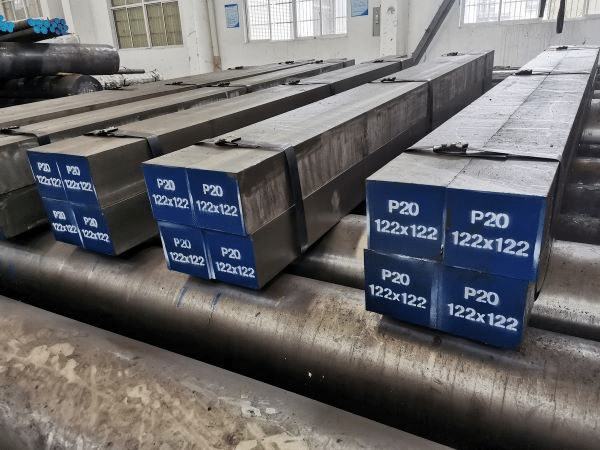
The decision of P20, H13 and S136 mold steel is based on production volume, environment, and quality requirements, but not on steel grade. No one size fits all best mold steel, as what fits a project perfectly may not work or may be a waste of money on a different project. It is a common misconception among buyers that a better grade of mold steel will always work better, whereas an improper choice of steel would just up the cost without the accomplishment. Mold steel should be chosen according to the requirements of application, not on the basis of hierarchy and price.
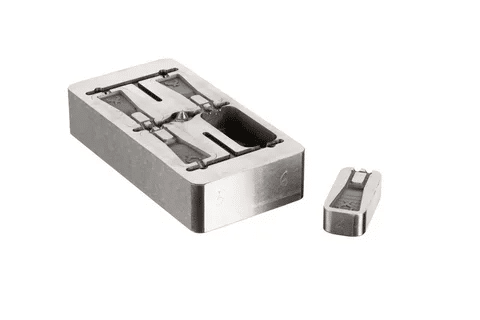
As a senior tooling engineer, who has been helping OEMs with an injection molding project, I have witnessed numerous situations where default to a high quality steel such as S136 resulted in over-specification on low volume projects, or where P20 was used leading to early wear in high heat applications. This guide deconstructs the real-life differences to enable you to make rational decisions. We will discuss tool life, quality of parts, costs, and in which instances each steel will work or not work in the real world.
Why Mold Steel Selection Requires Application Context
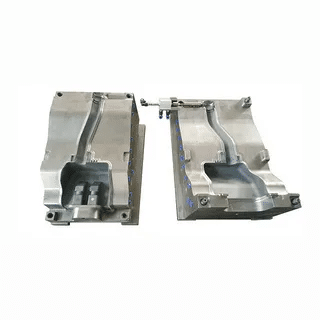
The choice of mold steel is not a universal choice; it will depend on the interaction of the material with the particular requirements of your injection molding process. The long-term success depends on the relationship between the steel properties, such as hardness, thermal conductivity, and wear resistance and the behavior of the molds during the process. An example of this is that a steel that may be exceptional in terms of corrosion resistance may fail in the event of high thermal cycling in case the application is aggressive resins or a high temperature.
The context of the application is more important than the ranking of the material since considerations like the cycle time, the type of resin used, and the exposure to the environment have direct impact on performance. Ignorance of these will mean you will choose a steel that wears out so fast or one that swells your budget without similar contribution. In our injection mold manufacturing services, we have optimized designs by matching steel selections with estimated production volumes and part tolerances, which is efficient with prototype to full scale production runs.
Key Factors Influencing Steel Performance
It is important to know the relationship between hardness and toughness. Harder steels do not abrade easily but can crack when fatigued, whereas tougher steels can take an impact better, yet wear easily. This is further complicated by environmental factors such as humidity or corrosive substance contained in plastics and this requires steels with alloy structure composition to preserve integrity with time.
Overview of P20, H13, and S136 Mold Steel
position to affordability, longevity, and specialized qualities and not necessarily pure metallurgical excellence. P20 is an alloy steel that is pre-hardened, machinable, and low-cost in nature and is ideal in simple applications. One of the hot-work tool steels which have been distinguished is H13, due to its ability to resist heat and toughness in harsh thermal conditions. S136 is a stainless version that is more corrosive resistant and can be polished to accurately cut parts.
Common applications are indicative of these advantages: P20 is used in low-to-medium volume molds with cost control as a primary consideration, H13 is used in medium-to-high volume and with thermal stresses, and S136 is used in high-precision or corrosive applications. This comparison of mold steel does not get into the deep end discussions of alloy compositions but rather the way these translate into real world application on the tool shops and production floors.
High-Level Comparison Table
| Steel Type | Typical Positioning | Common Use |
| P20 | Pre-hardened, economical | Low–medium volume |
| H13 | Hot-work, durable | Medium–high volume |
| S136 | Stainless, corrosion-resistant | High precision / corrosive |
Tool Life Expectations for P20 vs H13 vs S136
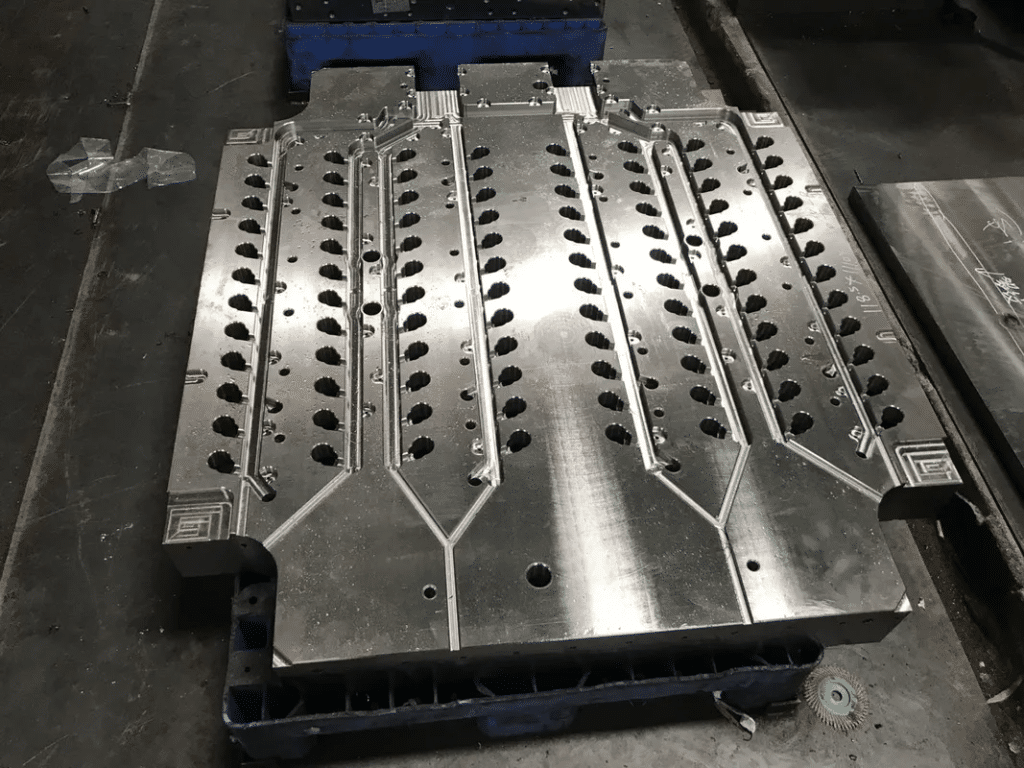
There is a big difference in the life of tools used in these steels and correct heat treatment and maintenance is critical in the realization of such potential. In the ideal scenario, P20 has a good performance in shorter runs but can wear out sooner in abrasive usage. H13 offers long service life due to the presence of chromium which increases resistance to thermal fatigue. S136, again, is a stainless material, and consequently, will sometimes have the longest lifetime in clean, high-precision systems; however, care is necessary to prevent pitting.
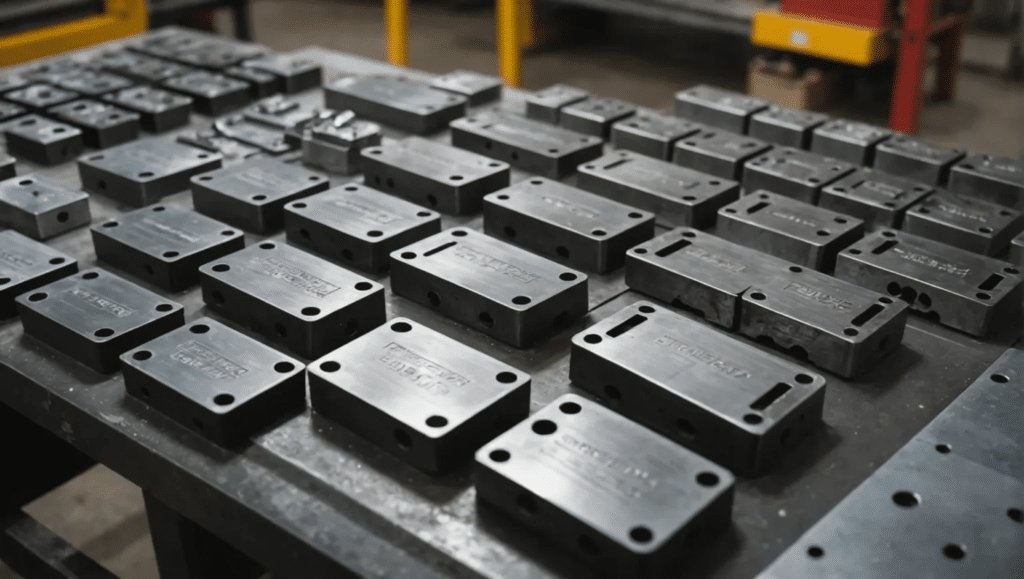
What is the use of heat treatment and maintenance? Poor quenching may cause cracking of H13, and failure to observe cooling channels in the P20 molds increases the rate of erosion. In exploring mold steel cost vs tool life trade-offs, we have discovered that even inexpensive steels can be viable in the course of long-term usage with the addition of a set of maintenance procedures to cut down the loss.
Steel Type vs Expected Tool Life Table
| Steel | Relative Tool Life | Suitable Production Volume |
| P20 | Low–Medium | ≤300k shots |
| H13 | Medium–High | 300k–800k shots |
| S136 | High | ≥1M shots |
Factors Affecting Real-World Tool Life
Outside the table, there is the issue of resin abrasiveness – glass-filled abrasives can reduce the life of P20 by half, whereas H13 can do the same. Microcracks should be checked frequently, particularly in the case of large volumes, where the cost of downtime spikes rapidly.
How Steel Choice Affects Part Quality and Surface Finish
The type of steel you choose has a direct influence on surface beauty and dimensional stability, and the polishing ability of the various P20, H13 and S136 is very different. P20 finishes off to a reasonable finish but can become dull with time because it has a reduced corrosion resistance. H13 is stable at high temperatures and needs machining expertise to attain mirror-polished surfaces. S136 is bright here and it has better polish retention and oxidizing resistance which is good in optical or medical parts.
In long-runs, the dimensional stability becomes paramount: thermal expansion can be handled by an appropriate design in H13, but in P20 it may warp in case the cycles are too violent. To learn more about the interference of mold steel on how mold steel affects tool life and part quality, the life of the tool and the quality of a part, consistency of the steel with the resin will prevent such defects as flash or sink mark.
Polishing and Finish Differences
P20 is economical in terms of SPI-A3 and in humid environments, it deteriorates. H13 is an SPI-A2 that is heat resistant and S136 is easily achieving SPI-A1 which is essential in high gloss usage.
Stability in Production Runs
S136 is also low thermal conductor which in high-precision molding enables tolerances to be maintained, but P20 is applicable to less demanding geometries. Poorly matched decisions in this case result in erratic parts, which raise scrap rates.
Cost Implications of Choosing P20, H13, or S136
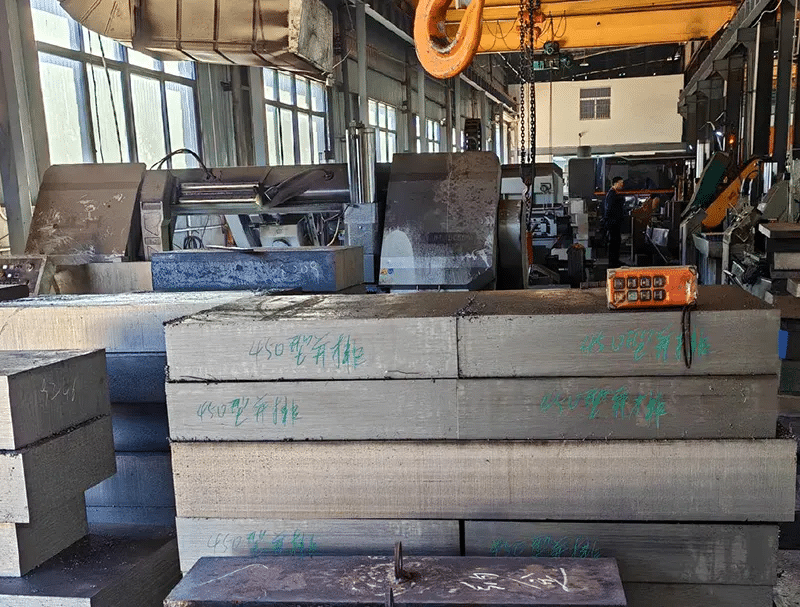
Tooling costs are not only material cost, and machining or heat treatment and lifecycle maintenance is often more than the initial cost of the tool. P20 will reduce initial expenditure, but can increase total spending in the long run because of the need to constantly repair the damaged equipment. H13 compensates this with moderate start-up cost that will result in a lower per part cost in high volume production. The increased price of S136 is explained by the fact that corrosion or precision requirements decrease downtimes and rework.
At which point does greater steel price lower lifecycle price? S136 does not incur any hidden costs of rust failures that afflict P20 in corrosive environments. Knowing the specifications of production production tooling steel requirements buyers in estimating the overall cost of owning the tool, and the choice made, which may be on a budget basis, without compromising the dependability.
Steel Choice vs Cost Profile Table
| Steel | Upfront Cost | Lifecycle Cost |
| P20 | Low | Medium |
| H13 | Medium | Low |
| S136 | High | Low–Medium |
Breaking Down Lifecycle Expenses
H13 upfront machining could cost an additional 15-20% to P20, but reduces the frequency of replacement due to its durability. The premium is compensated in medical molding that requires perfect services in areas of regulatory compliance.
When Each Steel Is the Wrong Choice
S136 is an over-specified choice that is a waste of resources when used in low-volume prototyping because the corrosion resistance is not utilised and costs are increased unnecessarily. The lack of specification of P20 in high-heat runs with abrasive will result in quick wear, which results in mold failures and stops production. H13, though a versatile coating, is the incorrect choice in very corrosive environments without further coating and leads to pitting causing loss of integrity of parts.
Over-Specification Scenarios
The cost of S136 simple, non-corrosive components using 30-50% more money with no advantage, sidelining funds to other project areas.
Under-Specification Risks
P20 bulk automotive molding is prone to erosion under heat stress, causing non-uniform cycles with reduction in production time.
Common Misunderstandings About P20, H13, and S136
One of the most common myths is that S136 is always the one to be used because it is stainless and therefore cannot withstand high-impact conditions when toughness is more important than corrosion resistance. Likewise, the rejection of P20 as a low-end-price tool is a disregard of the known history of success in medium-volume controlled settings. The choice of steel is not a determining factor of the performance of molds: design, cooling, and process parameters are all equally important.
Debunking “S136 Is Always Best”
S136 is better at cracking under frequent thermal shocks than H13 but lacks the precision and therefore does not work well in repetitive cycles.
Reconsidering “P20 for Cheap Molds”
P20 is predictable in non-aggressive designs, and is able to last longer than expected with correct maintenance.
Beyond Steel: Holistic Mold Factors
The emphasis on steel alone does not give enough consideration to the effects of runner design or ejection systems on the capability of the entire system to endure.
How Buyers Should Choose Mold Steel Rationally
Begin by aligning steel to your production projection: low volumes give the economy of P20, high run times the life of H13 or S136. Take into account environment and type of resin corrosive materials require S136, intensive ones require H13. Questions to the supplier include: What wear patterns have you experienced with this steel in similar applications? or What is the effect of heat treatment on anticipated shots?
Matching to Production Forecast
At less than 300k shots, P20 is cost-effective; and beyond consider H13 in terms of balance or S136 in terms of endurance.
Environmental and Resin Considerations
Moorish factories or acidic resin drive towards S136 in order to avoid oxidation.
Key Questions for Suppliers
Search query: Is it possible to find case studies on P20 vs H13 vs S136 mold steel in car parts?
Conclusion — The Right Steel Is the One That Fits the Job
When concluding on this comparison of mold steel, these are not the considerations but the apparent price and prestige that determines what to use in a particular production process in line with your needs. Economic tradeoffs in terms of the cost, life of tools, and quality guarantee effective operations with superfluous costs. Application-based decisions have proven to be reliable whether you are a mold designer considering the use of P20 mold steel or a project manager considering the use of H13 or S136 mold steel. Always put a strong emphasis on fit as opposed to defaults in order to achieve success in manufacturing.