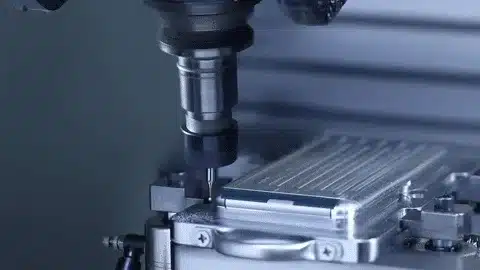
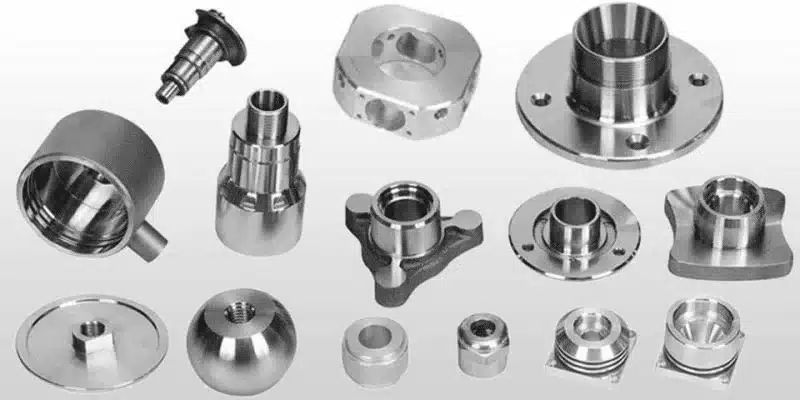
EDM machining is appropriate when handling electrically conductive machineries as well as machineries that are not easily or efficiently cut through using the traditional firing techniques.
Electrical discharge machining (EDM)- or sinker EDM of any electrically conductive material can, in reality, be done in either wire EDM or sinker EDM. Toughness is no obstacle in this case. By comparison with milling or turning where tool life decreases exponentially with a rise in material hardness to levels far beyond 50-55 HRC, EDM cuts material through controlled electrical discharges (sparks) instead of mechanical cutting forces. This renders EDM machining the method of choice in hardened tool steels, tungsten carbide, and titanium alloys and other difficult alloys where traditional methods are either slow, expensive or simply impractical as they result in too much tool wear, heat build up, or even distortion in the part.
EDM machining is most commonly used to machine materials that are electrically conductive and have hardness, toughness or complex geometry such that conventional machining would be inefficient or unfeasible. In die work and molding, in aerospace parts, or in very fine tooling we have frequently resorted to EDM because it provides tight tolerances and good surface integrity without providing mechanical loads even where the components were already fully heat-treated.
Why Electrical Conductivity Determines EDM Machinability
The only requirement of machining a material by EDM is electrical conductivity.
This is done by producing a sequence of high speed electrical discharges between an electrode and the workpiece which are submerged (or flushed) in dielectric fluid. These sparks generate localised heat which is very intense, of the order of 8,00012,000C, vaporizing and melting minute quantities of material. In the absence of conductivity, there exists no current flow, no plasma channel is formed and no erosion takes place.
Dying substances are necessarily incapable of supporting the discharges of sparks required to remove the material. Hardness, conversely, has practically no effect of its own, we have regularly EDM’d parts at 62 HRC or 65 with no trouble as long as it can conduct.
Thermal characteristics also take a back seat: high melting-point alloys or poor thermal conductors wear away more slowly and may also need different parameters to check electrode wearing, or obtain a set surface finish.
| Material Property | Impact on EDM Machining |
| Electrical conductivity | Enables spark generation (mandatory) |
| Hardness | No direct limitation—EDM ignores hardness |
| Thermal behavior | Affects erosion rate and heat dissipation |
| Melting point | Influences machining efficiency and stability |
Understanding how an EDM machine is structured helps clarify why conductivity is so central—the entire spark circuit depends on it.
Tool Steel: The Most Common EDM Machining Material
Hardened tool steel is still one of the most commonly hardened mold and die shop materials that are EDM-machined.
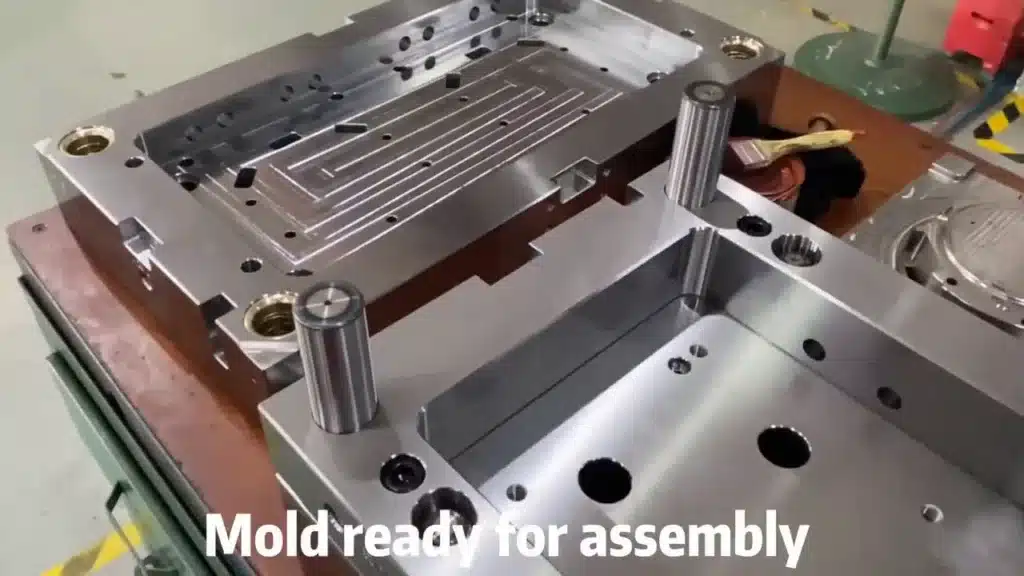
The workhorses of injection molds, stamping dies and forging tools are tool steels, including H13, D2 and P20. After heat treatment they become very hard to mill or grind unless the milling tools are quickly worn off or may crack. EDM avoids this: there is no contact, no deflection, no deflections.
Wire EDM is frequently used to fill in finer details of cavities or sinker EDM used in deep ribs and sharp corners in pre-hardened blocks. The process maintains high hardness levels of the material and maintains excellent dimensional stability- very important in tolerances of ±0.005 mm and below.
| Tool Steel Type | Typical EDM Application |
| H13 | Mold cores and cavities |
| D2 | Punches and dies |
| P20 | Pre-hardened mold components |
Practically tool steel EDM machining is predictable with standard copper or graphite electrodes and multi- pass finishing to surface values of Ra -0.4 -0.8 mm are commonplace with surface finishes.
Carbide: Why EDM Is Often the Preferred Machining Method
In the case of tungsten carbide, complex geometries are most often only feasible by EDM without tool destruction or destruction of the workpiece.
The hardness and brittle nature of carbide (it is frequently 8592 HRA) are a nightmare to traditional machining: carbide tools go haywire, diamond tools wear fast, and coarse shapes are slow to grind. With EDM there is no physical contact, and as such the only thing that could be of concern is wear of the electrodes (which can also be controlled with suitable settings).
They are commonly used in carbide punches, extrusion dies, drawing dies and wear inserts in molds. Wire EDM has also been shown to cut fine slots / profile on the part of a sharp internal corner, which intersects with the problem of grinding. Carbide milling has provided tolerances of in the range of ±0.002 mm on features that could not be milled.
The key advantage? They do not have any risk of micro-cracking due to mechanical force and the results are consistent even on cobalt-bonded grades.
Titanium and Specialty Alloys: EDM for Difficult-to-Machine Metals
The titanium alloys and superalloys such as Inconel are excellent materials that can be EDM due to the high cutting forces, work hardening and heat affected areas that are introduced when machining conventional materials.
Titanium (Ti-6Al-4V) is low thermal conductor with high strength resulting in a fast wear of tools and inadequate removal of chips by milling or turning. EDM eliminates the all that, no cutting forces, a little heat input to the bulk material, no work hardening.
Titanium structural parts in aerospace and harder titanium sinker pockets containing finely reviewed pockets in hardened titanium are machined using wire EDM and sinker EDM, respectively. Likewise with Inconel (and other nickel-based alloys), stable machining requirements exist, and the machining does not deform even with high hardness.
| Material | EDM Advantage |
| Titanium alloys | No cutting force, reduced tool wear |
| Inconel | Stable machining of heat-resistant alloys |
| Hardened stainless steel | Precision without deformation |
Rough to finish passes on titanium EDM machining can be as low as Ra 0.2-0.6 u.
Materials That Cannot Be Machined by EDM
Normally, this cannot be done in standard EDM processes since none of the equipment can release any electrical discharge into the material, and thus no conductors are involved.
This contains the majority of ceramics (alumina, zirconia), pure plastics, conductivity-free composite, and glass. Even certain coated metals (thick anodized aluminum) can be resistant to propagation of a spark.
In cases where these materials need to be of high precision:
- Alternative machining such as laser machining, ultrasonic machining or diamond grinding can be used.
- Look at hybrid solutions (e.g. electronic-assisted ceramics in laboratories)
- Replacement Conductive grades where possible (e.g. silicon carbide with additives)
We have sometimes dealt in tooling work, in which case we had a non-conductive insert, which we would just have routed to grinding or whatever could take it off.
How Material Choice Affects EDM Accuracy and Surface Finish
The properties of the materials have a direct impact on EDM performance in terms of machining speed or ultimate surface roughness, and electrode wear.
Compounds of higher melting point such as carbide and titanium are less susceptible to erosion and demand greater energy in use or increased cycle time. Ineffective thermal conductivity (e.g. titanium, Inconel) may result into more profound craters otherwise addressed, which influences roughness.
Certain alloys are higher wearers of electrodes e.g. titanium will tend to wear a little more than steel unless pulse times are low. Surface finish The parameters are critical: shorter on-times and lower currents lead to more fines finish (ra of 0.4m possible), whereas roughing set-ups leave bigger craters.
Practically we are always running test cuts on the real stuff grade to step set parameters. The most important is optimization, even a generalized chart is beneficial, in reality performance depends on alloy and heat treatment.
Conclusion — Matching Materials to EDM Capabilities
Finally, suitability of EDM material depends on electrical conductivity, rather than hardness. This process glitters where other techniques fail; in hardened tool steels of 60+ HRC that are brittle, carbide that cannot stand heat, titanium alloys that resist heat, and heat-resistant superalloy such as Inconel.
To mold engineers, sourcing managers, or OEM project leads, struggling to find a reliable and low-stress alternative that retains tight tolerances and surface quality, EDM is an extremely convenient option. It all depends on whether the material carries electricity- and whether the traditional methods would affect part integrity or make the lead time.