Blog

Your blog category

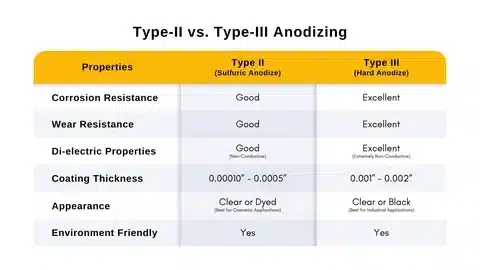
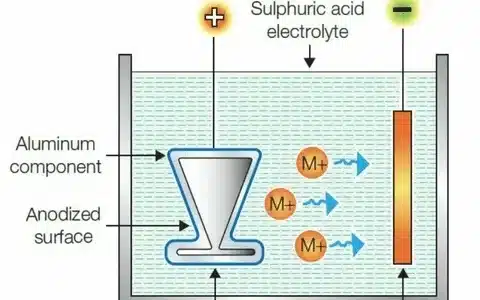
Table showing key differences between Type 2 sulfuric anodize and Type 3 hard anodize.
Blog

Type 2 vs Type 3 Anodize: Complete Comparison Guide

The basic distinction between Type II and Type III anodizing is the thickness of their oxide layers and subsequent performance characteristics with Type II having thinner layers (0.0001″-0.0005) resulting in use in decorative applications and cost-conscious projects, whereas Type III has thicker and stronger coatings (0.0005″-0.002) that are better suited to demanding industrial, aerospace, and military applications where the high performance costs of their manufacturing are justified.

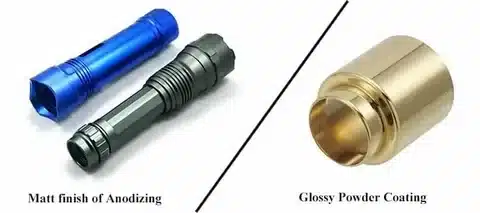
Two metal components showing surface differences, one with a matt anodized finish in blue and grey and the other with a glossy gold powder coated finish
Blog

Anodizing vs. Powder Coating: Which Aluminum Finish Suits Your Project?

Anodizing and powder coating have unique benefits to finishing an aluminum. Anodizing offers the best durability, low maintenance and metallic appearance that result in an integrated oxide coating which can be used in aerospace, architectural and electronics applications despite its high costs. Powder coating has the most diverse color range, is economical and environmentally friendly with a solvent-free system that electrostaticaly decoats upon objects, as well as in automotive, furniture and appliance applications where appearance and cost are important aspects. The best option will be determined by the balance of the needs in durability, appearance, environmental factors, and the cost elements related to a particular project.

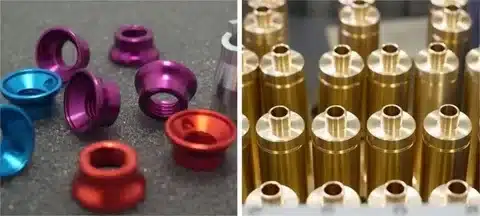
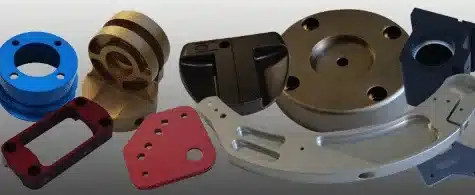
Comparison image showing anodised aluminum parts versus hard anodised aluminum components.
Blog

Anodizing vs. Hard Anodizing: Complete Guide

Anodizing and hard anodizing are electrochemical processes that enhance the durability and appearance of aluminum, but they differ in thickness, hardness, and applications. Standard anodizing creates a thin, decorative, and corrosion-resistant oxide layer, often used for consumer products where aesthetics and moderate protection matter. Hard anodizing, on the other hand, produces a much thicker and denser coating with superior wear resistance, hardness, and insulation properties, making it ideal for industrial, aerospace, and heavy-duty applications. In short, anodizing balances appearance with protection, while hard anodizing is chosen for maximum strength and performance in demanding environments.

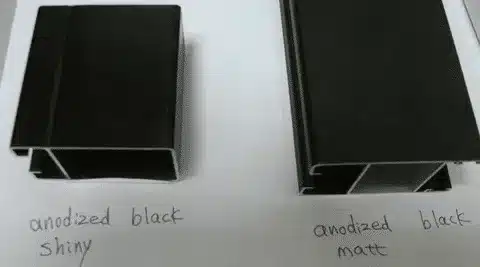
Side-by-side view of shiny vs matte black anodized aluminum profiles.
Blog

Black Anodized Aluminum: The Ultimate Surface Treatment Guide

Black anodized aluminium is produced by an electrochemical process in which aluminum surfaces are transformed into protective layers of aluminum oxide that is dyed black and sealed to make them more durable and aesthetically pleasing. This surface treatment is one that not only provides better corrosion resistance, wear resistance, heat dissipation, and electrical insulation but also is suited to aerospace, automotive, electronics, architectural, and military applications. The process has constraints in terms of alloy compatibility and possible variation of thicknesses, but with the right choice of anodizing type (I, II, or III) and with qualified service providers, the process would yield superior results that can yield long-term value by offering long-term life of components and lower maintenance needs.

Hard anodized aluminum parts in various shapes for engineering and manufacturing.
Blog

Hard Anodized Coating: Superior Protection for Aluminum Components

Hard anodizing is a modern electrochemical process that forms layers of thick aluminum oxide 25-150 micrometers in thickness, and provides far greater protection than the normal anodizing processes. This high-level surface treatment offers superior wear resistance, corrosion resistance, electrical insulation, and thermal stability which has made this indispensable in the aerospace, automotive, medical, and electronic sectors. New processes such as NUCOCOMP (r) and HART-COAT (r) also complement coating performance with polymer integration and precision processing and the process itself has high environmental performance including recyclability of by-products and long component life. Industries that need improved performance in terms of aluminum components would strive to apply hard anodizing when it comes to areas demanding greater durability and long-term reliabil

滚动至顶部