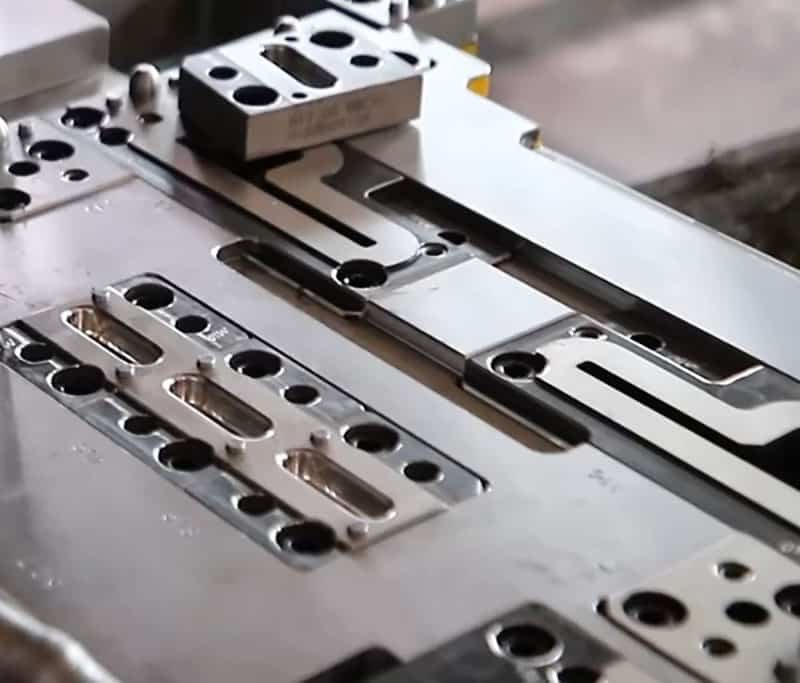
The injection mold design extends much further than the design of CAD models; it is a complex process of engineering that provides a link between the needs of the product and the realities of manufacturing and production. Taking it as a mere drawing exercise is not right because what needs to be done is to forecast the performance of the mold when in actual cycle conditions and to be stable and efficient. Most buyers think that the design of the mold is stopped at the computer-aided design, whereas in actual sense, it continues to tooling validation and stabilization of production.Good design of custom injection molding matches the requirements of the product with the reality of manufacturing way before steel is cut. The design of custom injection mold is not a design project, but an organized engineering process, which bridges concept, manufacturability, tooling, and production performance.
Why Injection Mold Design Is a Production-Critical Process
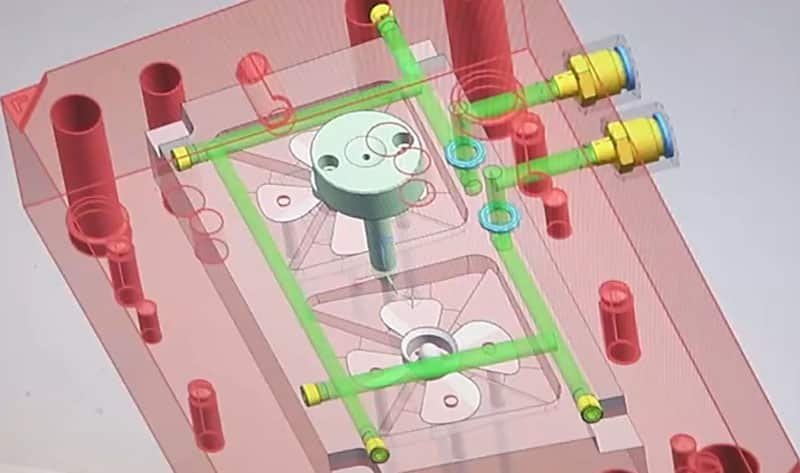
The design of injection mold forms the boundaries of the whole lifecycle of production, in which initial decisions alone determine the feasibility of the tooling and success of operation. In my case with managing complex programs, failure to consider this interconnection can easily lead to preventable setbacks.
Why Mold Design Decisions Lock in Cost and Quality Early
Decisions such as cavity design or cooling arrangement tie up resources early in life and affect the material consumption, cycle times that cannot be easily changed later without incurring a lot of cost.
How Design Errors Propagate Into Tooling and Production
A small undercut may not be of much design concern, but results in ejection during tests and therefore part failures and production time lost. This propagation highlights the reason why the design of custom moulds need to incorporate manufacturing forethought early on as in integrated injection injection mold design and manufacturing approaches.
Concept Stage — Translating Product Requirements Into Mold Strategy
The concept stage converts the abstract product demands into an influencing mold framework, and any derailment by misalignment would devastate subsequent stages. To do this right one has to balance part function and mold feasibility.
Understanding Part Function, Volume, and Material
Determine the final application of the part – as in load carrying with automotive part- to estimate the volumes and resin characteristics and decide on the selection of the mold material and layout.
Early Mold Concept Decisions (Cavity Layout, Parting Line, Gating Intent)
Choose single or multi-cavity depending on the forecast of volume, position parting lines to reduce flash, and arrange gating to fill uniformly. These are the initial steps which will avoid repetition of work; it is also important to think about knowing various providers of the mold services so that understanding different mold service providers to ensure the right expertise is engaged early.
DFM Analysis — Where Most Mold Design Risks Are Controlled
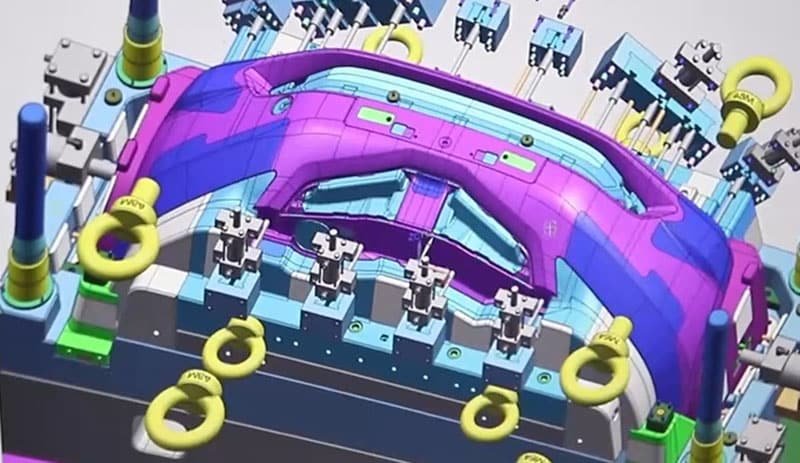
DFM analysis is the fear gatekeeper in which proactive checks in the manufacturability processes identify 80 percent of possible errors prior to their escalation. Missing depth in this case is a mistake that I have rectified in numerous programs.
Role of DFM in Preventing Downstream Issues
DFM evaluates design versus manufacturing limits, optimizing both efficient tooling and consistent parts, minimizing trial iterations and production scrap.
Typical DFM Focus Areas: Draft, Wall Thickness, Undercuts, Tolerances
Provide sufficient draft to ejection, even walls to prevent sink marks, and undercuts kept to limits, and realistic tolerances set. All these factors have a direct impact on the complexity and cost of mold; to understand its effects more thoroughly, consider the impact of mold design on part quality.
| Design Element | Poor Decision Impact | Optimized Outcome |
| Draft angle | Sticking, wear | Smooth ejection |
| Wall thickness | Sink, warpage | Stable filling |
| Gate location | Cosmetic defects | Balanced flow |
This table demonstrates the effect of DFM choices in custom injection mold design.
Mold Design for Defect Prevention
Mold engineering needs to incorporate fault elimination measures, because old time engineers understand that it is much more effective to deal with the risk at the design stage rather than implement corrective measures on the tool after the fact.
How Experienced Designers Anticipate Defects
Simulating flow and cooling, designers foresee the problem as short shots or voids, modifying vents or runners as needed due to the historical patterns of such projects.
Why Prevention Is More Effective Than Correction
Machining requires corrections, which are time and money consuming; prevention is best achieved by a strong design guaranteeing a smoother trial. This approach is central to mold design defect prevention in high-stakes applications.
Transition From Design to Production Tooling
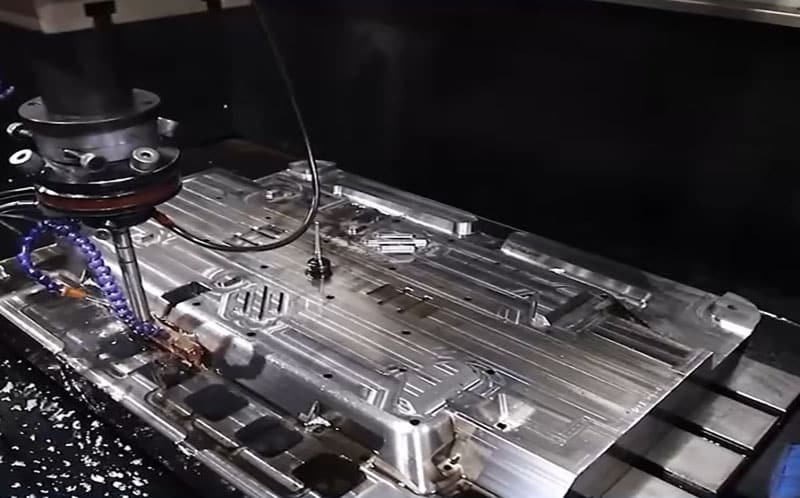
The transition to tooling is a commitment point, or a point at which the virtual model of the mold is transformed into real steel. Preparation in this case is not negotiable.
When a Design Is “Ready for Steel”
DFM completeness, performance-validated simulation, and tolerances approved by the stakeholders make a design ready such that no significant changes take place after machining.
Why Production Tooling Requires Stricter Design Discipline
Production tooling requires accuracy to survive cycles, unlike prototypes; loose design causes wear. The study of production tooling in injection mold manufacturing clarifies this discipline’s importance.
Trial, Validation, and Design Refinement
The design is then tested under real conditions at trials where adjustments are usually made to achieve the best performance. This is a cyclic process involving theory and practice.
Purpose of T1/T2 Trials
T1 checks rudimentary T2 polishes to quality, cycle, and consistency, and off the measurements to refine dimensions or cooling.
How Trial Feedback Refines Design Assumptions
It may have an imbalanced feedback during feedback, which may necessitate redesign of full run before even complete run. Efficient trials reduce loops; trial reduction in injection mold trial reduction can streamline this in mold design and tooling.
From Approved Mold Design to Stable Production
Approval also means that the design has become mature and production is the next step and stability is the most important fact. This step verifies the preparation of the mold to be scaled.
Criteria for Design Approval
Approval must be given based on passing of tests of satisfactory quality of parts, cycle time within limits and absence of defects under stress tests.
Transition to Mass Production and Process Stability
Ramp up is the optimization of the process such as tuning of parameters to be consistent to ensure the mold can run to high volume and does not fail.
| Area | Key Question |
| Geometry | Are all functional surfaces validated? |
| Cooling | Is cycle time stable? |
| Ejection | Is part release consistent? |
This checklist aids in verifying design readiness for production.
Common Misunderstandings About Custom Mold Design
Some of these myths impair successful mold programs usually because of simplistic perceptions of the process.
Design Equals Drawings Only
Design is often viewed as CAD to many people ignoring validation and optimization to achieve manufacturability.
Design Changes Are Easy After Tooling
The cost and time of making post-tooling changes is high because it involves making changes to the machining.
All Mold Designers Deliver the Same Outcome
Experience is not always the same; experienced teams guess risks that other teams overlook and this influences quality.
Conclusion — Mold Design Is a Lifecycle Commitment
To sum up, the design of custom injection molds coordinates the path to start with idea and move on to the trusted manufacturing, so that every stage is a continuation of the other one to overcome risks. The design of custom injection mold is the determining factor of how easily a product can transfer out of concept to a stable production, so it is a lifecycle decision and not an all-encompassing design project. It is through disciplined engineering at a young age that will allow OEMs to attain cost-effective and high quality results that facilitate long-term succeeding.