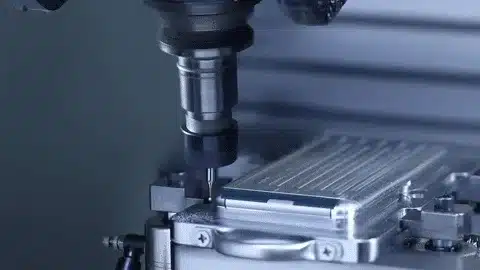
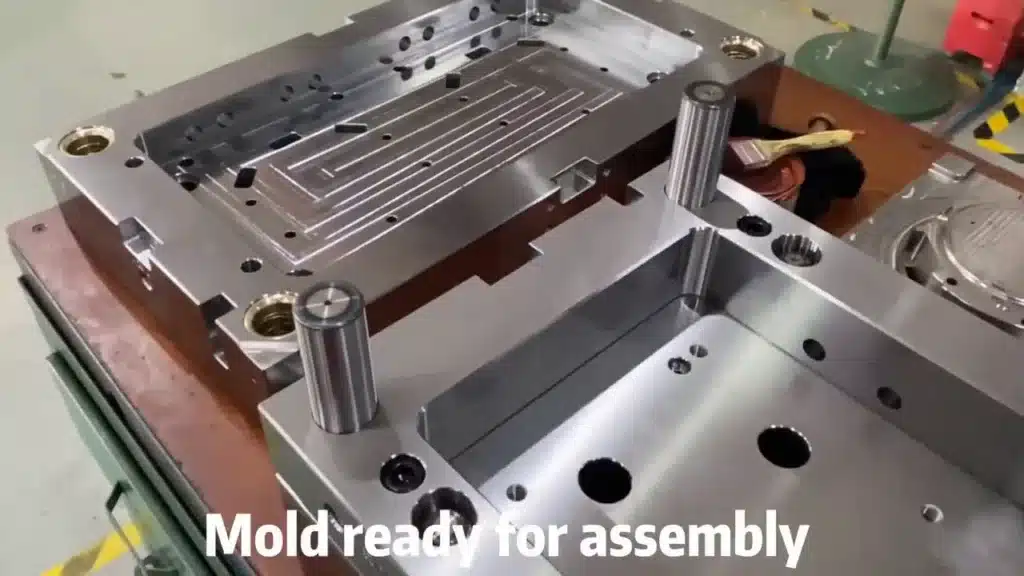
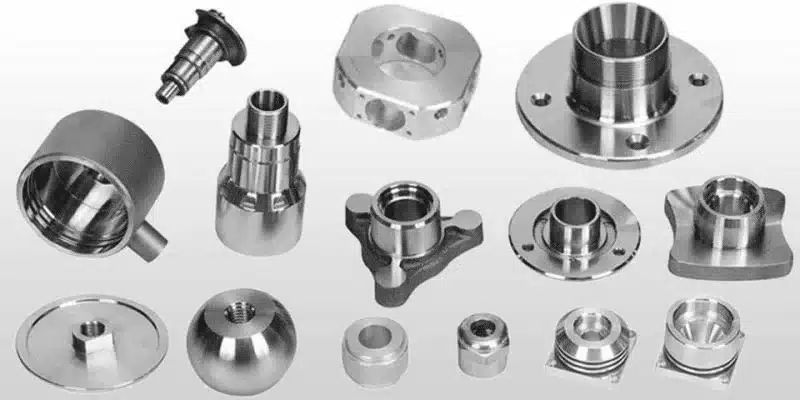
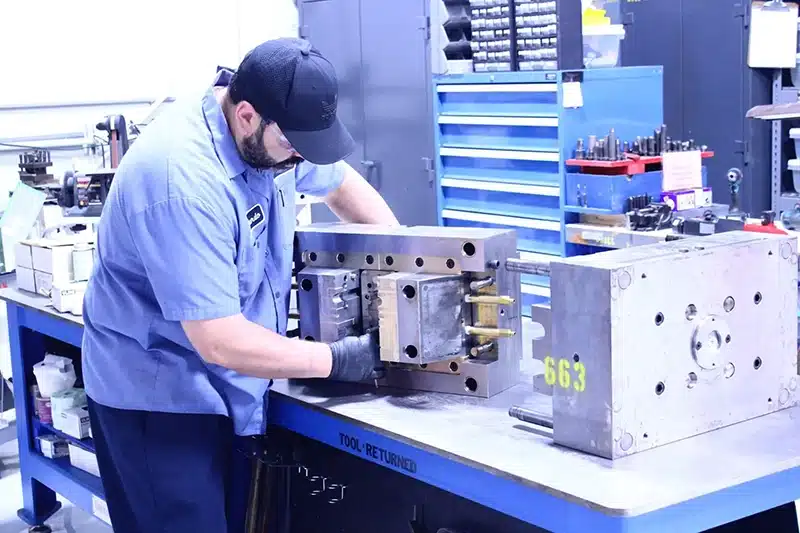
An EDM machine is a machine that powerfully regulates electrical discharges amid an electrode and a work piece to eliminate material without mechanical contact, which makes it suitable in high-precision components with hard materials. Simply put, it is a process of high-energy sparks that are repeated and erode the workpiece in the environment of dielectric fluids under the control of complex control systems. This is a non-contact process that enables cutting complex shapes and hardened metals such as tool steels or carbides, which otherwise would not be cut by the traditional cutting tools with either wear or deformation. An EDM machine functions based on the principles of exact controlled electrical sparks to erode a material in a highly controlled setting permitting the creation of intricate shapes and tight dimensions with no central force pressure on the physical tools.
What Happens During EDM Machining? A High-Level Overview
EDM machining initiates a basic interaction of electrical energy, material science and mechanical control with the material to be machined in order to obtain accurate material removal. The most basic principle of EDM working is the execution of sparks across a small gap when a workpiece is submerged in water and an electrode in a dielectric fluid and a voltage is applied to obtain this effect. The process itself is highly controllable due to pulses of discharges taking place, usually in microsecond, to avoid overheat and enhance repetition. The gap and movement is also regulated with the CNC integration and servo mechanisms, and thus EDM can be used in application, which requires accuracy within microns.
| Process Element | Function in EDM Machining |
| Electrode | Shapes and guides electrical discharge |
| Workpiece | Material being eroded |
| Dielectric fluid | Controls spark gap and removes debris |
| Power supply | Generates controlled electrical pulses |
| Servo system | Maintains optimal discharge distance |
Key Components in the Overview
To understand electrical discharge machining on a single glance, the interaction between these factors may demonstrate, the electrode, commonly composed of copper or graphite, is the tool, which does not de-touch the piece of work. The dielectric plasma isolates until a voltage value is reached whereby the plasma enables the formation of a spark. In such arrangement, the material removal process is thermal, not mechanical, and the stresses are not applied to the precision parts which cause distortion.
Step 1: Setting Up the EDM Machine and Workpiece
Successful EDM machining starts with proper set up as it is the direct cause of the accuracy, surface finish, and stability of the entire process. This process entails ensuring the workpiece is in a firm holding on the machine table with the electrode perfectly aligned with it. Selection of electrodes depends on the nature of the operation needed as well as the desired surface quality and the compatibility of the material, whereby we can use copper where we want fineness, and graphite where we want to rough the material. The dielectric fluid should be a deionized water or a hydrocarbon oil prepared to an adequate degree of right viscosity and cleanliness in order to sustain regular sparking.
Workpiece Fixation and Alignment
Clamping systems to fix the workpiece reduce vibrations, and may include magnetic or vacuum chucks when the workpiece is non-ferrous. Position verification with touch probes or optical systems are used to obtain positional errors less than 0.01 mm. Any mismatch may result to non uniform erosion or electrode wear, which affects the tolerances of the final part.
Electrode and Fluid Preparation
The choice of electrode material influences conductivity and longevity; a graphite material can resist more currents at a time to remove products faster. Preparation of dielectric fluids involves the process of filtration in order to remove contaminants since impurities may lead to arcing or discharges of unstable conditions. The quality in this step is to guarantee that the gating of EDM machining steps are not interrupted, and this has a direct implication on the efficiency of the process of the mold components or a complex tooling.
Step 2: Generating Electrical Discharge Between Electrode and Workpiece
Electrical discharge generation is the transition point between set up and active machining as the voltage accumulated across the spark gap starts controlled sparking. A pulse of high voltage exists between the electrode and the workpiece with a topography of 0.01 to 0.05 mm between the electrode and the workpiece with a dielectric fluid in the gap. The sparks will only be generated when the dielectric breaks at the specific voltage limit producing a plasma channel that spans microseconds. This discontinuous manner is unlike continuous methods of cutting, where this method enables cooling between discharges thereby avoiding thermal damage.
To have a visual breakdown of this layout, refer to our EDM machine diagram.
Voltage Application and Spark Formation
Depending on the material and required removal rate, the power supply supplies up to 300 volts. Controlled conditions occur to prevent short circuit like sparks in which the dielectric becomes an insulator until it breaks down. It is this accuracy in the operation of EDM machining that provides minimum heat-influenced areas, and this is normally restricted to 0.001 mm depth.
Pulsed vs. Continuous Discharge
When compared to continuous flow discharges, pulsed discharges found in EDM allow time to be available in evacuation of debris and stabilization of temperatures. This is important in applications such as die sinking or wire EDM where the repetitive ability of the intensity of a spark relates to consistent finishes on the surface at 0.1 micro-meter.
Step 3: Material Removal Through Controlled Spark Erosion
The process of removing material in EDM is through the use of spark erosion, all discharges result in the melting and vaporization of a small amount of the workpiece without any mechanical action. The high temperature of the plasma channel to up to 8,000 to 12,000oC expels molten particles in the dielectric fluid, creating a hole which builds up to produce the required shape. It is a thermal process, which works best with hardened materials since hardness does not hinder erosion but electrical conductivity does.
| EDM Characteristic | Resulting Benefit |
| Non-contact machining | No tool pressure or deformation |
| Thermal erosion | Suitable for very hard materials |
| Controlled discharge | High dimensional accuracy |
Mechanics of Erosion
Every spark ablates between 10 -6 and 10 -4 mm 3 of the material, which is proportional to pulse energy. No physical contacts imply no burrs or remnants of stresses, which are good with precision mold inserts. This operation shows the reason why EDM is used in carbides or heat-treated steels where otherwise machining would result in the breakage of the tools.
Benefits for Hard Materials
Lack of mechanical force allows EDM to be able to work on Rockwell hardness over 60 and so on features such as sharp inside corners that cannot be made through milling of certain material unless specialized tools are used.
Step 4: Dielectric Fluid Circulation and Debris Removal
During the life cycle of participation in the process, the circulation of dielectric fluids is necessary to attain stability in the process since it cools the machining process and removes eroded particles. The fluid shields the gap to restrict the beginning of sparks and absorbs the heat to avoid over heating. This can be done by effective flushing- by pressure jets or oscillation by electrodes -which removes debris such as metal oxides so that the gap is clear of subsequent discharges. The bad decision of managing the fluid causes the bridging, unstable arcs, or rough surfaces with recast layers.
Cooling and Insulation Role
The low conductivity of the fluid eliminates premature sparking, and its flow rate, which can be 5-10 liters per minute, conducts the heat so that temperatures do not rise above boiling points. Such duality aids long running operations without deterioration of the electrode.
Flushing Techniques
Standard techniques are through-hole being hollowed up of deep cavity, or side jets hollowed up of the surface. Lack of maximum debris removal will lead to secondary discharge thereby decreasing accuracy and increasing machine time up to 20 percent.
Step 5: CNC and Servo Control for Precision Movement
The way of movement and maintenance of the electrode is regulated by CNC and servo so that a sub-micron precision of the EDM process is guaranteed. Servo systems provide dynamic control over the location of the electrode based on voltage sensor feedback and keep the optimal gap constant regardless of material loss. CNC programming specifies the toolpath, which is analogous to milling but changed to use non-contact erosion, which permits complex 3D contours.
| Control System | Role |
| Servo control | Maintains discharge gap |
| CNC program | Guides machining path |
| Feedback system | Adjusts for stability and precision |
Servo Gap Maintenance
Discharge voltage is monitored, and in case of a wideness of the gap the electrode is pushed forward by the servo. This is a real-time compensation of wear in long runs that ensures consistency.
CNC Path Guidance
Programs also use dwell times and an adaptive feed rates, which is optimized between roughing or finishing. It is this integration that significantly increases accuracy of EDM to a level of ±0.005 mm, which is essential with aerospace or medical tooling.
Why This Process Enables High Precision and Complex Geometry
High precision is automatically encouraged by the machining process of the EDM type since it can remove deflection and vibration of tools and it is able to cut intricate shapes such as narrow slots or undercuts. Repeatability is due to the fact that all parameters are digitally controlled thus can be used in large-scale production of components used in the moulds. The use of EDM deepens aspect ratios greater than 10:1, though compared to conventional access tool is not limited as on such a tool, the tool cannot penetrate deep cavities (as demonstrated in figure 1).
Achieving Complex Shapes
In harden alloys, EDM machines flatten edges and smaller features otherwise difficult to achieve using grinding or milling machines without physically force, tailored in hardened alloys.
Precision and Repeatability
The process parameters are hyped to tolerances of ±0.002 mm, and the finishing modes have surface finishes of less than Ra 0.05 μm.
Conclusion — Understanding the EDM Process Leads to Better Manufacturing Decisions
The principle of functioning of an EDM machine helps explain why this step is crucial in the fine process manufacturing. EDM is used to produce precise motions through the combination of controlled electrical discard, working with dielectric fluid, and by moving with CNC control through precise machining of hardened and complex parts, which otherwise are difficult to include using conventional methods. This information enables the engineers and buyers to determine when they need EDM by considering aspects such as hardness of material, complexity of geometry and tolerance required to plan their projects.