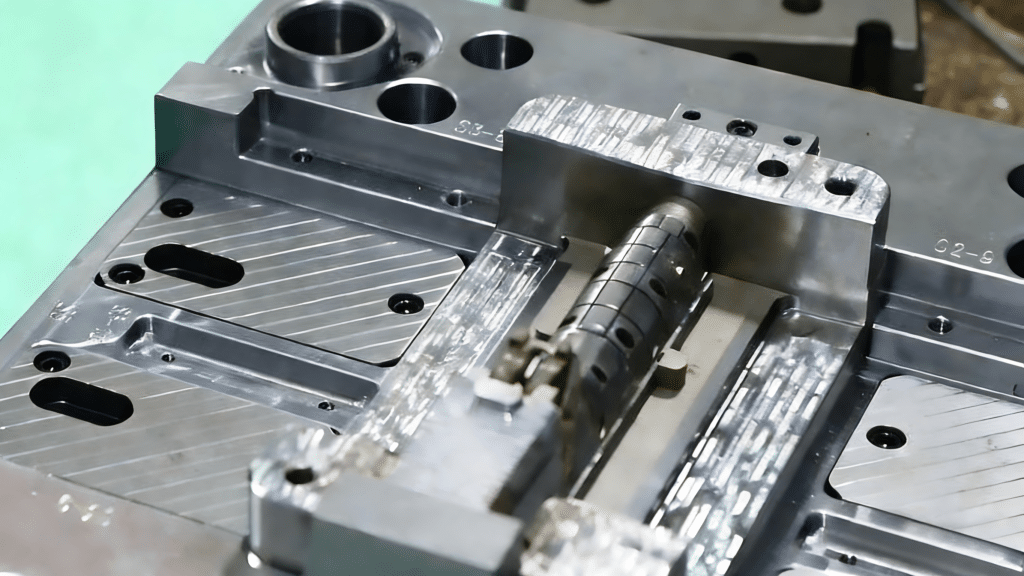
Buyers in the injection molding industry tend to confuse the mold manufacturers with mold design companies resulting in clashes of expectations and hiccups in the project. This is a misunderstanding due to confusing terms in quotes and marketing, yet it poses actual holes in the way that one deals with another in case of a failure. Most purchasers believe that the process of mold designing and creating the moulds are synonymous services, yet this is not the case since they are two entirely different models of responsibility.
The decision between a mold manufacturer and a mold design company would decide who is in control of tooling performance, risk elimination and production responsibility. The distinction between an injection mold manufacturer and a mold design company is not on the capability label, but on the ownership of the responsibility of the tooling performance. Being a senior tooling engineer who has recommended many OEMs to choose their sourcing, I have witnessed the effect this decision may have on a project timeline and budget. We could separate it step-by-step to understand the rationale of your decision.
Why This Distinction Matters in Injection Mold Projects
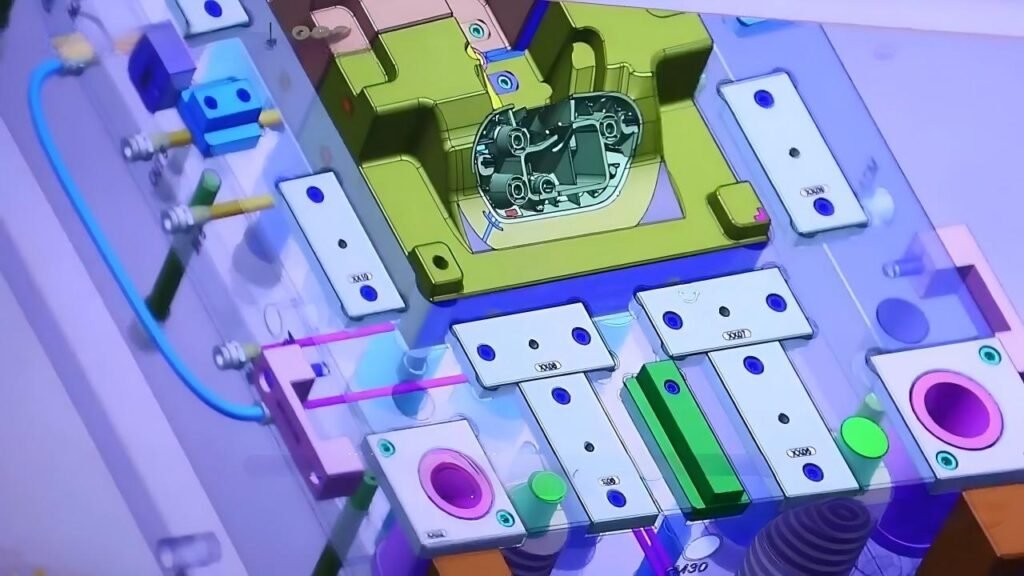
The division of design and manufacturing is a critical concept to understand since it directly correlates to the party that would suffer in the long term regarding tooling problems. In my experience, this is the situation that should not be ignored and results in finger-pointing when molds fail to work as desired.
How Tooling Responsibility Affects Cost, Lead Time, and Production Stability
In a decentralized system, costs are increased due to rework and wastage of time- consider additional shipping to make the fix and time wasted during production. One solution ensures that lead times remain stable and that molds run without problems after the initial trial by spotting problems early. Stability of production is worst hit; this is due to errors in production whereby inconsistent tools lead to defects on parts which increases the scrap rate and depletes margins during high volume production.
Why Issues Often Appear After Design Approval
Such issues as the poor ejection or cooling imbalance may pass design checks but arise in machining or experiments, when the real world factors are introduced. That is why complete ownership is important designers cannot alone consider the manufacturing variables. When selecting a supplier of molds, one should look at integrated mold making services mold making services provide a smooth roadway between concepts and dependable production.
What an Injection Mold Manufacturer Is Responsible For
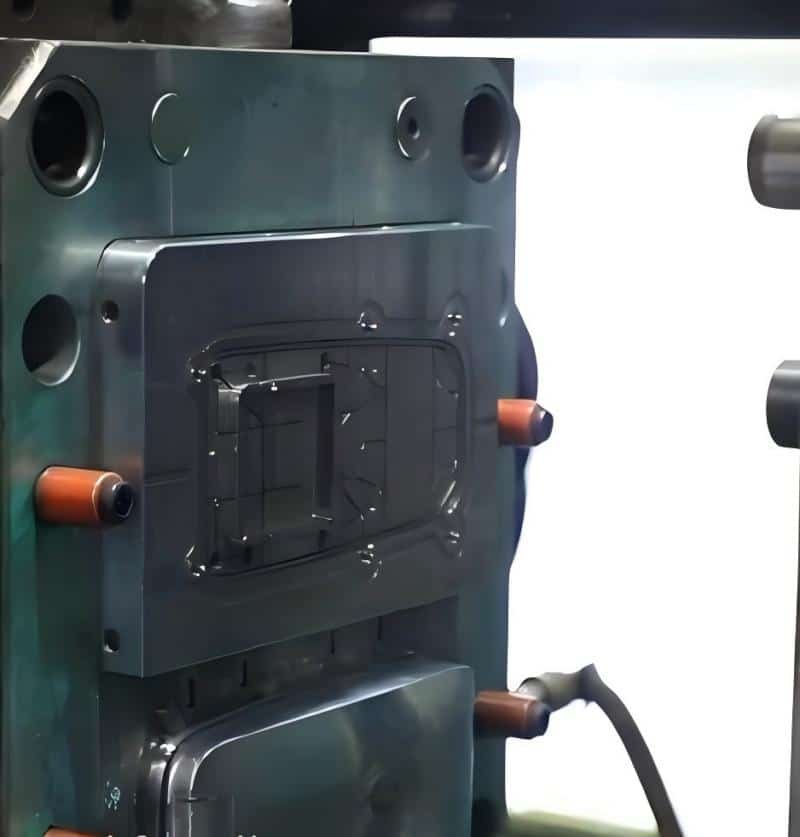
The full burden of transforming designs into practical instruments falls upon an injection mold manufacturer which has the entire process under its ownership. This systemic role reduces the number of handoffs and offers accountability.
Ownership of Tooling Performance
Designs are approved by manufacturers as manufacturability validated and correct tool steels such as H13 or P20 can be chosen as per the cycle needs and the resin. They also deal with heat treatment and finishes to make it stronger and this directly affects the life of the mold and uniformity of the part.
Accountability After T1 / T2 Trials
This goes to the continuous support like the part supply or troubleshooting and is, therefore, the best choice of OEMs who have long term reliability on injection mold partner selection.
What a Mold Design Company Typically Delivers
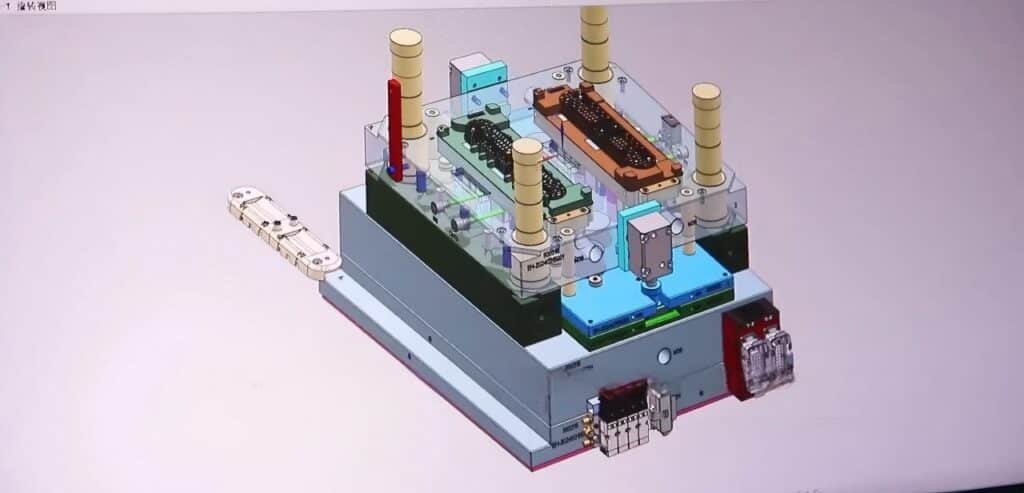
A mold design firm takes a very limited approach by concentrating on the conceptual stage leaving the actual implementation. This narrow area is appropriate in the initial stages but it has loopholes in other areas.
Design Scope vs Execution Scope
They do well in CAD modeling, simulation and DFM feedback, and optimise features such as parting lines or inserts to give the best performance in theory. Nevertheless, they end at deliverables such as 2D/3D files, without managing their conversion to machined steel.
Where Responsibility Typically Ends
After handing over of designs, the responsibility changes to the buyer or another fabricator. This may create fit failures in the case of non-meet of manufacturing tolerances, and points to the dangers involved in injection injection mold manufacturer vs mold design company n which execution is not owned. No, no, that is self-link; that is to be disregarded. In fact, there is no self-link in the teaching, continu.
Responsibility Gaps and Common Project Risks
The situation is aggravated by the fact that design and manufacturing are decoupled and that a small oversight becomes a big failure. I have been the leader of groups in such situations, and the lack of clarity in the beginning would have cost the team weeks.
How Responsibility Gaps Form
Miscommunication creates loopholes such as impossible design components that are revealed during machining, and this results in blame games. In the absence of coherent control, the time wasted in the revisions is doubled as they are thrown back and forth.
Typical Problems: Rework Disputes, Unclear Accountability
It is prone to such common problems as dimensional inaccuracies or material failures, and there is no visible owner of these fixes, which leads to additional costs or schedule slippage. In order to alleviate this, full-chain capabilities should be assessed supplier selection mistakes in mold making by evaluating full-chain capabilities early in the process.
Manufacturer vs Design Company — Side-by-Side Comparison
On a side by side comparison, there are striking differences on the way the two deal with a significant aspect of tooling projects. This table is a summarization of the essentials according to the observations in the real world.
| Evaluation Dimension | Injection Mold Manufacturer | Mold Design Company |
| Tooling responsibility | Full lifecycle ownership | Design only |
| Manufacturing execution | In-house or controlled | Outsourced |
| Trial support | Included | Often excluded |
| Post-delivery accountability | Ongoing | Limited or none |
| Risk ownership | Manufacturer | Buyer |
This collapse highlights the importance of making manufacturers the responsibility bearers of mould i.e. manufacturers bear more risk as compared to design companies that push the risk down the chain.
How Experience Changes the Outcome
Life favours the integrated roles over the pure designers since proactive risk management can be made, which the pure designers may overlook. In complicated projects, it may be the difference between smooth sailing and frequent adjustments.
Why Experienced Manufacturers Anticipate Design Risks
Veterans identify the pitfalls such as thermal expansion or flow during the design review phase, and introduce fixes prior to machining commencing. This vision reduces unpredictability.
How Experience Reduces Trial-and-Error
They also optimize processes by using previous projects and reduce the trial periods cutting down the whole process and making it more efficient. Assessing experience in precision mold manufacturing during a selection of a mold supplier is the experience in precision mold manufacturing.
Which Option Is Right for Different OEM Scenarios
This depends on the characteristics of your project, whether to be speedy, complex or controlled. The following is a logical set of guidelines that are grounded in OEM circumstances that I have come across.
New Product Development
In the case of prototypes or iterative designs, a design company can be flexible without binding obligations.
Tight Tolerance or Complex Molds
Here, manufacturers shine, offering complete precision on both ends of the requirements.
Cost-Driven Projects
Evaluate whether short term savings would be worth taking long term risks.
| Project Scenario | Recommended Choice | Reason |
| Complex functional parts | Mold manufacturer | Full accountability |
| Early concept validation | Design company | Speed and flexibility |
| High-volume production | Mold manufacturer | Stability and lifecycle control |
In the development of long-term relationships, take into account what makes up a potential custom mold manufacturing partner to ensure alignment with your needs.
How OEMs Should Make the Final Decision Rationally
OEMs do best when choices are made with regard to internal strengths and project risks, without making assumptions of roles. This scientific methodology eliminates expensive errors.
Evaluating Responsibility Expectations
Who is going to own fixes: do you have an in-house manufacturing to match a designer or do you need a complete handover?
Aligning Internal Engineering Capability
When your team is dealing with fabrication, then a design company is enough and not integrated manufacturing.
Avoiding Role Mismatch
Check the references and case studies to fit. To gain a better insight, see how to choose a reliable mold making manufacturer to structure your evaluation logically.
Conclusion — The Difference Is Responsibility, Not Capability
Fundamentally, the difference between injection mold manufacturer and a mold design manufacturing company can be reduced to who bears the burden of a real-life performance out of a mold. Manufacturers are involved in full ownership, which will be effective in reducing risk in the manufacturing-intensive situation, whereas design companies offer agile support on conceptual stages. It must be a choice between an injection manufacture and a mold design firm on the basis of who captures tooling performance and risk rather than the one who produces drawings quicker or quicker quote. By doing this, OEMs will be able to obtain tooling that facilitates long-term reliability and productivity.