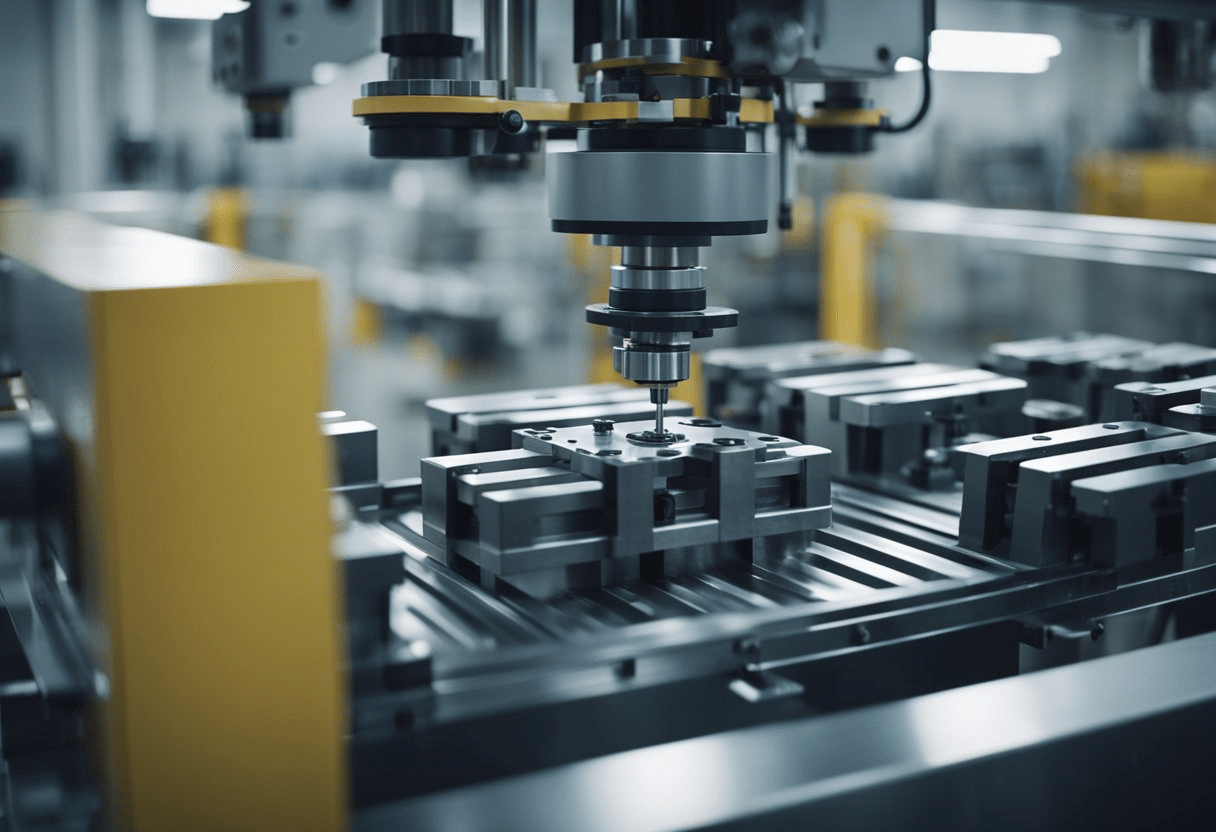
Plastic Injection Molding Services

Precision Injection Molding for Industrial Applications

ZC Mould provides complete plastic injection molding services — from mold design and tooling to production molding and inspection. We work with OEMs and manufacturers who need accurate, repeatable plastic parts and a stable long-term manufacturing partner.

Mold Manufacturing Injection Molding DFM Support OEM Production
What We Do

Injection Molding Built Around Your Part Requirements

Plastic injection molding is a manufacturing process where molten plastic is injected into a precision-made mold cavity, cooled, and ejected as a finished part. The process is widely used across industrial and commercial applications because it delivers consistent dimensions, stable quality, and efficient production once tooling is established.

At ZC Mould, we handle both the tooling side and the molding side. Our service covers the full path from reviewing your part design, to building the mold, to running production, and delivering inspected parts ready for use.

  • DFM analysis to catch design issues before tooling begins
  • Mold design and precision mold manufacturing
  • Trial molding, adjustment, and process validation
  • Production molding with dimensional checks
  • Inspection and documented quality records
Service Coverage

What ZC Mould Provides

Each project is handled end to end — from early part review through to delivery of inspected, production-ready components.

01

Part Review and DFM Analysis

Before tooling starts, we review your 3D model or drawings to identify areas that could affect moldability, part quality, or tooling cost. DFM feedback is provided in writing so your team can evaluate and confirm before we proceed.

02

Mold Design Support

Our tooling team prepares mold design documentation based on your part requirements and agreed specifications. Gate location, parting line, draft angle, and ejection method are all reviewed and confirmed with you before machining begins.

03

Precision Mold Manufacturing

Molds are manufactured in-house using CNC machining and EDM processes. Mold steel grade, cavity count, and expected shot life are selected based on your production volume and material requirements.

04

Injection Molding Production

Once the mold is approved, production runs are managed with consistent process parameters. Material handling, shot weight, cycle time, and cooling are controlled to maintain part consistency across the production batch.

05

Quality Inspection

Dimensional inspection is carried out using calibrated measuring tools. Critical dimensions are checked against your drawing tolerances. Inspection records are available per batch, and we can arrange CMM reports for parts with tighter requirements.

06

Secondary Operations Support

We support basic post-molding requirements including gate trimming, simple assembly, and surface finishing coordination. For additional requirements such as printing, coating, or polishing, we can discuss what is feasible based on your specifications.

How It Works

Our Injection Molding Process

A structured process from part review to delivery — designed to reduce surprises and keep your project on track.

01

Part Review and DFM

We review your 3D file or 2D drawing and provide written DFM feedback. Wall thickness, draft angles, undercuts, and gate placement are assessed before any tooling commitment is made.

02

Material Selection

We help confirm the appropriate plastic material based on your application requirements — load conditions, temperature range, surface requirements, and regulatory needs where applicable.

03

Mold Design and Tooling

Mold design drawings are prepared and shared for your review. Once confirmed, mold machining begins. We use CNC milling, EDM, and grinding equipment to build mold components to the required tolerances.

04

Trial Molding and Adjustment

First shots are produced and measured against drawing requirements. Any dimensional corrections or surface adjustments are completed before the mold is approved for production.

05

Production Molding

Approved process parameters are locked in and production runs begin. Process monitoring ensures part consistency is maintained throughout the batch, whether short run or high-volume production.

06

Inspection and Delivery

Final parts are inspected for critical dimensions and surface quality. Inspection records are prepared and parts are packaged and shipped with supporting documents as required.

Our Capabilities

What We Are Set Up to Handle

ZC Mould is suited for customers who come with a part drawing and need a factory that understands both tooling and production. We are not a trading company — we manufacture the mold and run the parts in-house, which allows direct communication on technical questions throughout the project.

  • Drawing-based manufacturing with tolerance review before tooling
  • Multi-cavity mold design for higher production efficiency
  • Tight-tolerance mold components machined in-house
  • Material and gate selection based on part function
  • Dimensional consistency tracked batch to batch
  • Suitable for custom part production: prototyping to volume runs
  • Supports GB, JIS, DIN, AISI, and client-specified standards
Why Work With Us

What Makes ZC Mould a Practical Choice

We focus on the things that matter in long-term manufacturing relationships: technical accuracy, honest communication, and consistent output.

Tooling and Molding Under One Roof

We build the mold and run the parts in the same facility. This direct connection means tooling decisions are made with production in mind, and any mold corrections during trials are handled without third-party delays.

Precision Manufacturing Mindset

Our team comes from a precision parts background. We approach injection molding projects with the same discipline applied to tight-tolerance CNC work — dimensional accuracy, controlled processes, and documented results.

Practical Engineering Communication

We communicate directly on technical questions. DFM feedback, mold design confirmation, material suggestions, and inspection reports are all documented in writing — reducing misunderstandings and project delays.

Reliable Long-Term Production

For customers running repeat orders, we maintain mold records, process parameters, and material specs between production runs. This continuity helps ensure that part quality does not drift from the approved standard over time.

Materials

Common Plastic Materials We Work With

Material selection affects part performance, mold design, and production economics. We work with standard thermoplastics and can accommodate customer-specified materials where the application requires it. If you have material requirements defined in your drawing or spec sheet, share them with us at the quoting stage.

ABS
Acrylonitrile Butadiene Styrene

General-purpose, good impact resistance. Common in consumer products, enclosures, and housings.

PP
Polypropylene

Lightweight, chemical resistant, cost-effective. Widely used in industrial and consumer applications.

PC
Polycarbonate

High impact strength and optical clarity. Used in electronics, protective covers, and lenses.

PA
Polyamide (Nylon)

Good mechanical strength and wear resistance. Common in gears, structural components, and connectors.

POM
Polyoxymethylene (Acetal)

Low friction, high stiffness. Used for precision mechanical parts, guides, and sliding components.

PMMA
Acrylic

Optically clear and rigid. Used where transparency and UV stability are required.

TPU
Thermoplastic Polyurethane

Flexible and abrasion resistant. Suitable for soft-touch components and sealing applications.

+
Customer-Specified

We can work with other thermoplastics based on your drawing or material specification sheet.

Industries

Applications Across Key Sectors

ZC Mould serves customers across multiple industries where plastic part accuracy and production consistency are important to the end product.

Automotive

Interior and exterior plastic components, brackets, clips, covers, and functional parts where dimensional accuracy and material consistency are critical for assembly fit.

Electronics

Housings, connectors, switch components, and structural plastic parts used in electronic devices and assemblies. Tight tolerances and clean surfaces are standard requirements in this sector.

Medical

Non-implantable plastic components, laboratory equipment parts, and device housings. Projects in this sector require documented material traceability and tighter process control.

Industrial Automation

Functional plastic components used in automation equipment, jigs, guides, and support structures. Parts often need to meet dimensional specifications for system integration.

Consumer and General Industrial Products

Plastic components for consumer goods, hardware, tools, and general industrial equipment. This covers a broad range of part types where volume efficiency and consistent quality are key priorities.

Quality Control

Dimensional Accuracy from Tooling to Delivery

Consistent part quality in injection molding depends on getting the tooling right first, then maintaining stable process parameters during production. We approach quality as a process discipline, not just a final inspection step.

Critical dimensions are measured against your drawing tolerances at key stages — after mold trial, during production approval, and at the time of final inspection before shipment. Records are maintained per batch and are available upon request.

Tooling accuracy reviewed at manufacturing
Process parameters locked after mold approval
Dimensional inspection per batch
Repeatability tracked across production runs
Inspection records available per order
CMM reports available for critical parts
Post-Molding Support

Support After the Part Is Molded

In addition to production molding, we can handle certain secondary operations depending on your part requirements. We discuss these requirements at the quoting stage to make sure what we offer matches what you actually need.

Gate Trimming

Standard gate trimming is included as part of the molding process. Specific trimming requirements should be noted on your drawing or specification.

Simple Assembly

Basic assembly operations such as insert placement or sub-assembly can be arranged depending on part complexity and volume. Discuss requirements at the quoting stage.

Surface Finish Requirements

Mold surface texture (SPI / VDI standards), gloss level, and special finish requirements should be defined in your drawing. We confirm achievable finish before tooling begins.

Printing and Marking

Pad printing, laser marking, or other surface marking options can be discussed. We will confirm capability and cost impact based on your part geometry and marking specification.

FAQ

Frequently Asked Questions

What is plastic injection molding? +
Plastic injection molding is a manufacturing process where molten plastic material is injected under pressure into a precision-machined mold cavity. Once cooled and solidified, the part is ejected from the mold. The process is widely used for producing plastic parts in repeatable quantities because it delivers consistent dimensions and stable surface quality once the tooling is established.
What information do you need for a quotation? +
To prepare an accurate quotation, we need your 3D model (STEP or IGS preferred) and 2D drawing with dimensions and tolerances. We also need to know the plastic material you intend to use (or require a recommendation), the intended annual production volume, and any specific surface finish or post-molding requirements. The more detail you provide at the quoting stage, the more accurate our pricing will be.
Can you provide both mold manufacturing and molding production? +
Yes. ZC Mould handles both the tooling and the molding production in-house. We build the mold and then run parts using the same mold in our production facility. This means you deal with one supplier for both stages, and tooling decisions are made with production requirements in mind from the beginning.
What plastic materials can you work with? +
We regularly work with standard thermoplastics including ABS, PP, PC, PA (Nylon), POM, PMMA, and TPU. We can also accommodate other customer-specified thermoplastic materials based on your application requirements. Material selection should be confirmed at the quoting stage so that mold design, gate sizing, and process parameters can be planned accordingly.
Do you offer DFM support before tooling starts? +
Yes. Before we commit to tooling, we carry out a DFM (Design for Manufacturability) review of your part. We check for issues such as insufficient draft angles, wall thickness variations, undercuts that require side actions, and gate placement considerations. DFM feedback is provided in writing so you can review and confirm before tooling begins.
Can you support both low-volume and mass production? +
Yes. We work with customers at different production scales. For lower volumes, single-cavity or simplified mold configurations can help manage tooling cost. For higher volumes, multi-cavity molds and optimized cycle times are used to improve production efficiency. We discuss the appropriate tooling approach based on your expected volume and cost targets at the quoting stage.
How do you help control molded part quality? +
Quality control starts with tooling accuracy — a well-built mold produces consistent parts. After mold approval, process parameters are documented and maintained across production runs. Dimensional inspection is carried out against your drawing tolerances, and inspection records are maintained per batch. For parts with tighter requirements, CMM-based dimensional reports can be arranged upon request.
Get Started

Ready to Discuss Your Injection Molding Project?

Send us your drawing or 3D model and we will review your part, provide DFM feedback, and prepare a detailed quotation. Tell us your material, tolerance requirements, and production volume — we will take it from there.

滚动至顶部