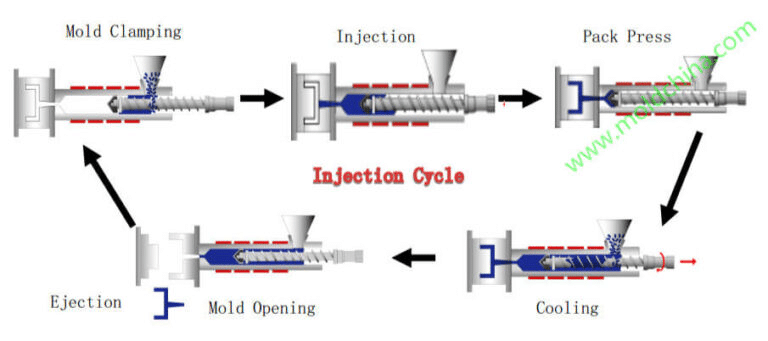
Various experiments are a common phenomenon in the injection molding world, including some experienced mold makers. These cycles are due to differences between design and reality in actual manufacture where the variables such as material flow, cooling speed, and part ejection are not necessarily what is expected. What is frustrating about this is that, it is possible to foresee many of the trial matters in retrospect, many of them can be tracked to neglected assumptions or undone validations at the early levels. The most widespread myth that buyers hold is that trial and error is merely a necessary evil of the injection mold trial process, and the analog of debugging in software. As a matter of fact, they are often indicators of design and engineering holes that can have been fixed during the initial design phase.
The reason why injection molds need more than one trial is due to the fact that design assumptions do not work on the real tooling as it is undergoing. Mold trials can be reduced by first removing uncertainty in design and engineering choices when the steel has not yet been cut. With increased emphasis on solid upfront planning, manufacturers will be able to reduce such cycles and produce more predictable results with less surprises.
What a Mold Trial Is (and What It Is Not)
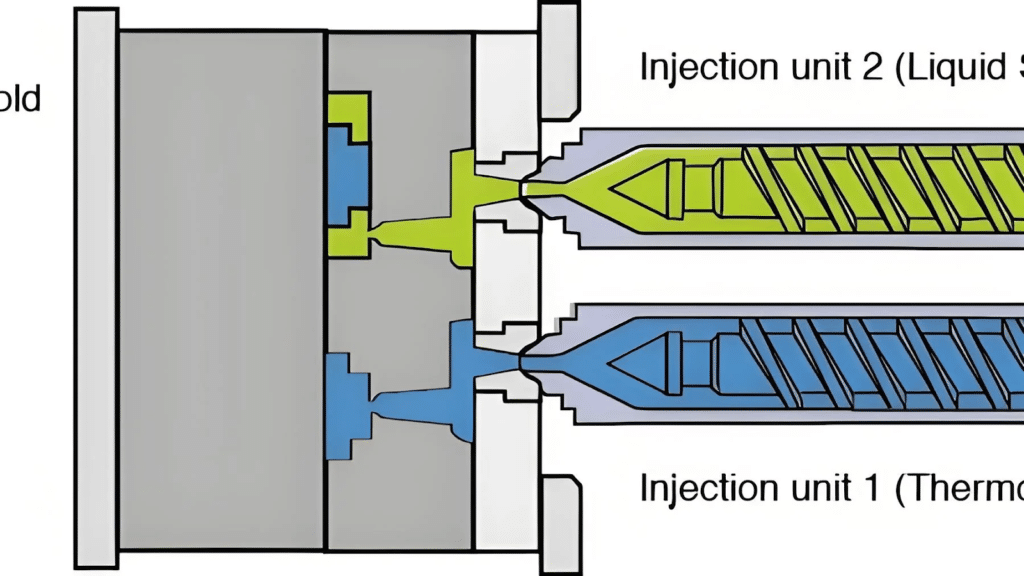
A mold trial is essentially a validation procedure, not a workshop remedial. The initial trial (T1) is usually the use of the initial parameters in the mold to ensure a basic functionality, such as filling, packing, and ejection. T2 and later rounds are based on this, making improvements to part quality, cycle time, and defect removal. Trials, however, are not to big redesigns rather ensure that the mold is doing what it was designed to do and should not be used as a platform to correct fundamental mistakes.
This is a significant difference since the view of trials as a fix-it stage is a source of inefficiency. An example would be when a mold does not fill consistently in T1 it would mean that there is a gating problem that has not been simulated before. Validation is used to make the mold to specification whereas correction is used to make timelines longer by making changes to the mold in reaction to it. In order to obtain dependable outcomes, an overall injection mold design and production should be considered at the very beginning, and the trials should be aimed at refining the results instead of changing the oil. It’s essential to integrate comprehensive injection mold design and manufacturing practices from the outset, ensuring trials remain focused on fine-tuning rather than overhauling.
Why Injection Molds Often Require Multiple Trials
The many trials are mainly due to the fact that when switching to a physical tooling the hidden variables that have not been seen in the simulations are revealed. Design assumptions, regarding the behavior of materials under pressure, thermal expansion or tools wear, which in theory may seem realistic, fail in practice because of other dynamic factors, such as machine variation or resin variability.
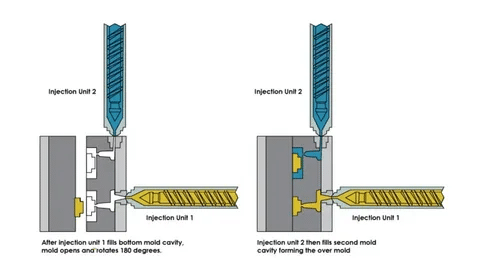
Early choices like part geometry or runner layout can never be completely seen to be faulty until they are actually run during actual production. To illustrate, an incorrect shear rate underestimation could lead to burning or holes, and the changes would require the implementation of further tests. Not by chance, but it is a symptom of half-blind vision. TheseThis isn’t random; it’s a symptom of incomplete foresight. Addressing these through a structured custom mold design process can preempt many issues, turning potential multi-round ordeals into streamlined validations.
Design-Related Root Causes Behind Repeated Trials
The most frequent repeat offenders are designed in and during the design phase and their assumptions about geometry, gating, cooling, and ejection fail to meet the demands of the production process. Geometry may be the best to use in CAD, whereas in molding, sharp edges may cause stress concentration to result in cracks or incomplete fills.
Gating assumptions can be invalid in the event that melt flow is not evenly distributed resulting in short shots or flash. Cooling layouts which do not take account of hot spots cause warpage and plans of ejection which do not take the draft angles into consideration cause the part sticking. They do not stand alone, and they are tradeoffs that are made early and go as trial failures where trial fixes have to be made. Understanding how injection mold design affects part quality and cost is key to avoiding such pitfalls.
| Design Assumption | Trial Outcome | Typical Fix |
| Uniform filling | Short shots | Gate redesign |
| Stable cooling | Warpage | Cooling optimization |
| Easy ejection | Part sticking | Draft / ejector changes |
This table demonstrates that unjustified assumptions are directly transferred to trial interruptions, and to eliminate them, careful design reviews are necessary.
Mold Defects as Indicators of Incomplete Design Validation
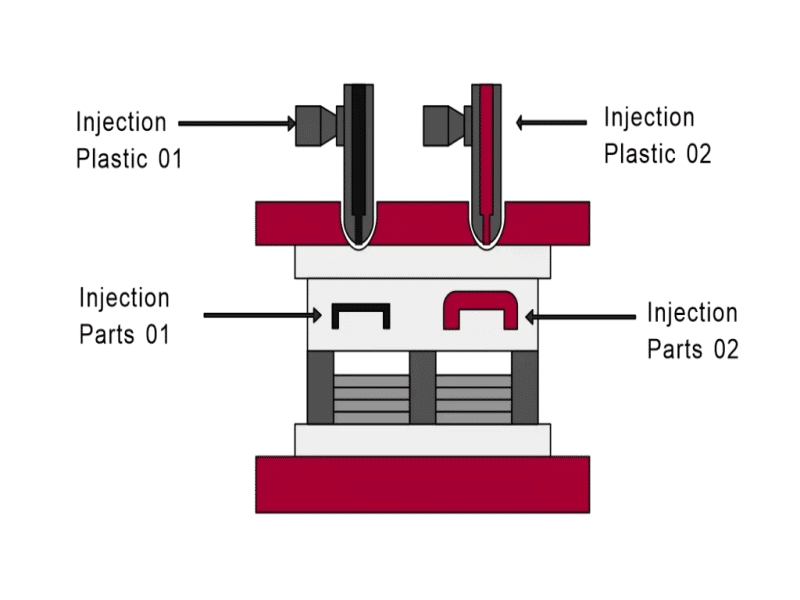
Faults in trials are not random factors; they are the bright signs of the fact that the design validation was not done. and Sink marks, as an example, indicate uneven wall thicknesses, or insufficient pressure in the packing, which may have been indicated by tooling through the use of mold flow analysis.
The connection between defects and trial reiteration is straightforward: a defect that is not resolved requires another round to test corrections which increases delays. Defects can be regarded as indicators instead of unexpected events and in this way engineers may trace the root causes of the defects such as mismatch on material selection or oversights in venting. Implementing proven mold defects and prevention methods shifts the focus from reaction to prevention, reducing the overall trial count.
The Role of Precision Mold Making in Reducing Trial Rounds
To do this, accuracy in mold making is not a bargain even in the case that it is not termed as a high-precision because tolerances affect the performance of the mold directly on the first trial. The corecavity interfaces can have misalignments, such as in flash or parting line misalignments, which need several steps to eliminate.
Tolerance stack-ups compound these issues, where cumulative variances in components lead to inconsistent part dimensions. Alignment effects, such as those from guide pins or bushings, ensure repeatable cycles, minimizing variables that force extra trials. Embracing precision mold making principles builds in reliability, allowing trials to confirm rather than correct.
How Mold Modifications and Rework Increase Trial Count
These problems are compounded by stack-ups of tolerance that result in non-uniform parts dimensioning caused by the accumulative nature of variances in components. Repeatable cycles are achieved by alignment effects, e.g., of guide pins, bushings, which reduce variables and force additional trials. reducing mold modification and rework involve rigorous pre-tooling simulations to lock in designs earlier.
Cost and Schedule Impact of Repeated Mold Trials
Modifications at late stages are bound to increase the number of trials by interfering with the baseline performance of the mold. Once a change, such as resizing a runner, is added after preliminary experiments, it may invalidate a previous validation, and new iterations are needed to determine the impact of the change on the flow, cooling, and ejection.
Rework tends to destabilize assumptions; as an example, the welding of a new insert may cause changes in the heat distribution, thus causing unexpected warpage. This chain reaction makes one adjustment a multi trial nightmare. Plans of minimizing cost impact of repeated mold trials drives better upfront investments in design.
| Trial Count | Cost Impact | Schedule Impact |
| T1–T2 | Manageable | Minor |
| T3–T4 | Significant | Delays likely |
| T5+ | Severe | Program risk |
This table shows the ever-increasing consequences, which explains why reducing trials is a strategic need.
How to Systematically Reduce Injection Mold Trials
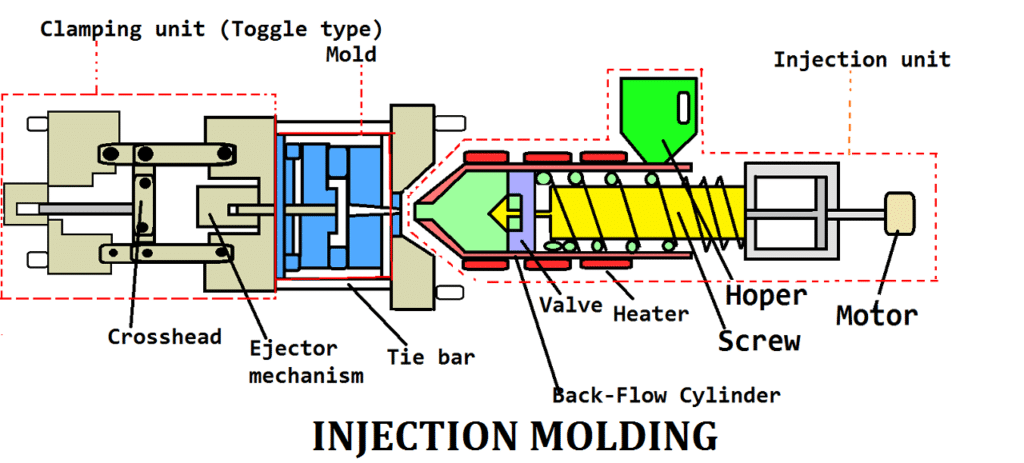
The systematic reduction starts with the front loading validation to identify the problem before it gets to the shop floor. This includes strong design to manufacturability (DFM) checks, through which the pitfalls are simulated and avoided.
The use of objective endpoints in trials is achieved by setting up clear acceptance criteria, e.g. dimensional tolerances and defect thresholds. The cross-functional reviews that incorporate the input of all three i.e. designers, toolmakers and molders encourage holistic solution. To optimize the trial of the mold, an iterative improvement must be made based on data obtained in each run, although the intention is to reduce the number of runs with the help of proactive actions.
| Stage | Key Action |
| Design | Robust DFM review |
| Tooling | Precision alignment |
| Trial | Data-driven feedback |
By using this checklist in the injection mold validation, in numerous instances, trials can be reduced by half according to industry standards.
Common Misunderstandings About Mold Trials
One of the most common misconceptions is the assumption that the greater the number of trials, the greater the quality, which is also that they are based on inefficiencies instead of being comprehensive. Trials are not inevitable; carefully planned and with careful planning many projects will succeed in T1 or T2.
The other fallacy is that processing adjustments will counteract the defects in design to a certain degree- raising or lowering temperatures or pressures may help to conceal the underlying problem, but it will hardly solve the underlying problem such as inadequate gating. The demolition of these myths creates a shift of focus to prevention engineering in the mold trial process.
Conclusion — Fewer Trials Start With Better Design Decisions
In conclusion, the way to reduce injection mold trials is in prevention first philosophy, where doubts are procedurally removed by rigorous engineering. With a detailed validation of design and cross-teamwork, manufacturers will help to overcome the traps that contribute to a long series of iterations. This is not a corner cutting issue but making informed decisions early enough so that when steel is cut the mold is ready to achieve success. Finally, decreasing mold trials is more efficient, reliable, and project successful, but it is not based on the reactive fixes.