Blog

Your blog category

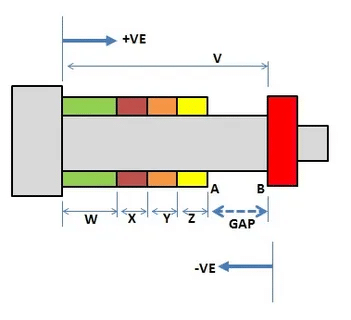
Linear stack-up analysis diagram showing gap calculation and directional tolerance effects.
Blog

Tolerance Stack-up Analysis: A Complete Guide for Precision Manufacturing

Tolerance stack-up analysis constitutes a core engineering practice that guarantees precision mold components satisfy their functional requirements while minimizing manufacturing costs. When manufacturers grasp both worst-case and statistical analysis techniques, they can make well-informed choices regarding tolerance allocation and the associated manufacturing processes. The critical step is choosing the most suitable analysis method in accordance with the application’s demands, the manufacturer’s capabilities, and the budgetary constraints.
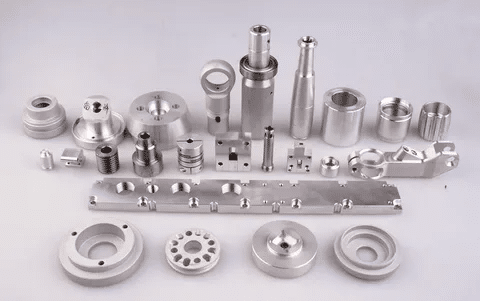
Custom CNC machined metal parts in various designs.
Blog

CNC Machine Parts: Complete Guide to Components and Functions

CNC (Computer Numerical Control) machines are the pinnacle of the modern precision manufacturing business which is made up of the highly advanced components working together to develop the highly accurate components. The small detail of the machine frame down to complex feedback systems all play a vital part in attaining the close tolerances and high end product quality that is required by the automotive, medical and semiconductor packaging industries. A compatible knowledge of these constituents is vital to the manufacturers who desire to streamline their production procedures and do not want to lose their market competencies in precision manufacturing.

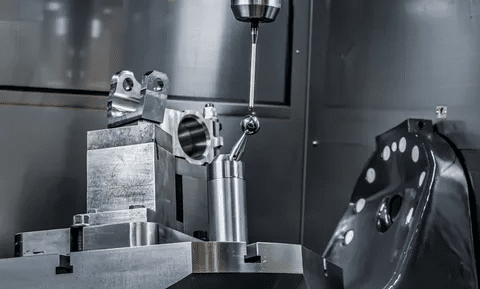
Multi-axis CNC coordinate system measuring machined component for GD&T compliance.
Blog

CNC Machining Tolerances: A Complete Guide to Precision Manufacturing

CNC machining tolerances CNC machining tolerances specify acceptable variation between parts produced and are key towards proper fit, function and assembly. Normal tolerances are nominal +0.005″ or less and -0.005″ or less for general machining work, and +0.001″ or less and -0.001″ or less under scientific machining. Tighter limits are possible when such are functionally necessary. The key to success is also balancing between the functional requirements and manufacturing capabilities with the help of proper tolerancing approaches coupled with the use of effective quality control mechanisms. The use of strategic tolerance specifications, i.e. only using tight tolerances where required, offers best-in-class part performance and manufacturing cost through the best possible process design and characterization.

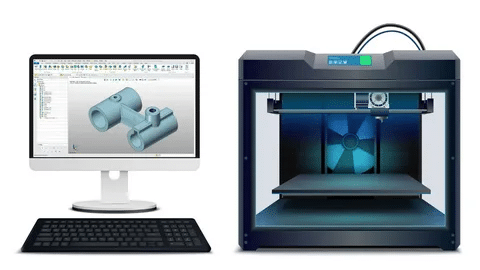
CAD design software interface linked to 3D printer for file export and print preparation.
Blog

3D Printer File Types: A Complete Guide for Precision Manufacturing

Knowledge of the 3D printer file formats is essential in the successful additive manufacturing project. This is a full tutorial on the most popular file formats in 3D printing, including STL, OBJ, Swiss cheese AMF, and polycos 3MF formats. With the precision mold components you would like to prototype or with the complex geometries you would like to make, it is important to select a file format that originally influences the quality of the print as well as compatibility and efficiency of the manufacturing process. Get to know how to choose the best format to use in your particular application and find out the major differences among different 3D printing file formats.

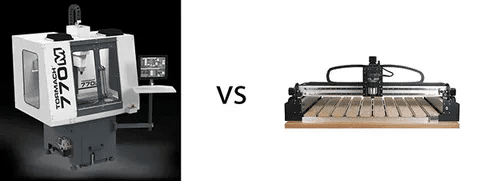
Professional-grade CNC milling and routing equipment comparison
Blog

CNC Router vs Milling Machine: Complete Comparison Guide

CNC milling machines and routers have distinct needs of manufacturing where milling machines have an added advantage of precision (tolerance is + / -0.001mm) in cutting metals and hard materials and routers being fast in the preparation of softer materials such as wood and plastics. Milling machines are rigid in construction with high precision spindles suited to precision mold parts and connector work rather than large work volumes and quick material removal as seen on routers to provide sheet work. The selection is material specific, involving precision or scale of production and overall milling machines are considered where strict precision is required and routers are used in large scale machining in softer materials.

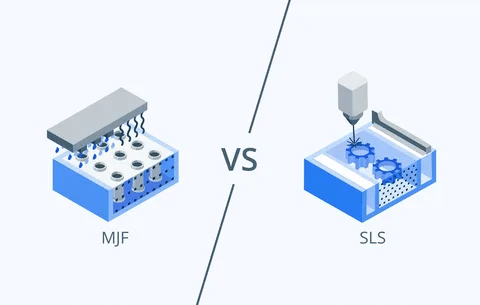
Isometric diagram comparing MJF and SLS 3D printing process mechanisms
Blog

MJF vs SLS: Which 3D Printing Technology is Right for Your Manufacturing Needs?

MJF (Multi Jet Fusion) and SLS (Selective Laser Sintering) are two 3D printing processes that are typically used for creating durable, functional parts, but they vary in speed, detail, and finish. MJF has higher speed and resolution with better surface finishes and is best for creating high-quality, end-use parts in bigger quantities. SLS is more generic with a greater variety of materials and better suited to complex geometries and smaller production runs. The selection between MJF and SLS boils down to your manufacturing needs—whether it’s surface quality and speed with MJF, or complex capability and material flexibility with SLS.

Blog

FDM vs SLA: Complete 3D Printing Technology Guide

FDM (Fused Deposition Modeling) and SLA (Stereolithography) are two of the most common 3D printing technologies, each designed for a particular use. FDM employs thermoplastic filaments and is both cost-effective, robust, and simple to operate, and hence appropriate for prototyping and functional parts. SLA, on the other hand, employs liquid resin and UV light to create highly detailed prints with smooth surfaces, hence ideal for detailed designs, dental models, and visual models. Although FDM is cheaper and more suitable for mechanical durability, SLA is superior in precision and finish. The correct option relies on whether your project values strength and price (FDM) or detail and surface quality (SLA).

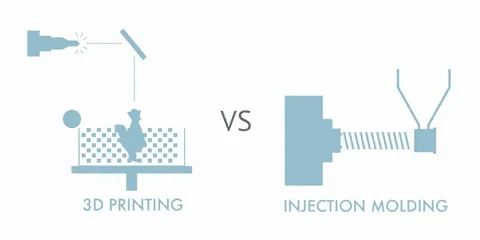
Simple infographic comparing 3D printing with injection molding process
Blog

3D Printing vs Injection Molding: Which Manufacturing Method Is Right for Your Project?

Selecting between injection molding and 3D printing is your project’s requirement for volume, cost, speed, and complexity. 3D printing works best for low-volume production, quick prototyping, complex or highly customized designs, with rapid turnaround and little initial investment. Injection molding is more economical for high-volume production, providing uniform quality and quicker production rates once the initial tooling is done. While 3D printing permits design freedom and constant revisions, injection molding is superior to produce high volumes with accurate and reproducible outcomes. Knowing your project’s size, cost, and design needs will assist in determining the optimal approach.

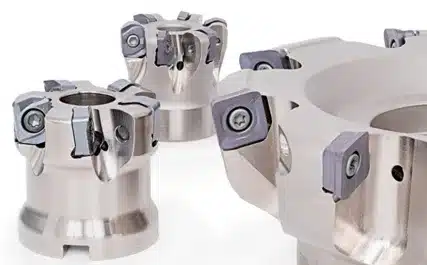
Indexable milling cutters designed for flexible and efficient roughing
Blog

What is Metal Removal Rate: The Complete Guide to Understanding MRR in Machining

The material removal rate (MRR) refers to the quantity of material eliminated in one minute of machining as it is given in special calculations concerning various machining processes such as the milling (MRR = D x W x F / 1000) and turning (MRR = D x F x S). The optimization of MRR means a compromise of cutting parameters into a single number , through selection of tools and machine types and keeping in mind the quality and economical consideration. To be successful, we need structure, surveillance and incorporation of modern technologies to gain optimum competence and profitability in the production processes.

Heated steel bar being formed with a die under hydraulic forging machine
Blog

The Complete Guide to Metal Forgers: Transforming Industries Through Advanced Manufacturing

Metal forging industry is a seamless combination of traditional artisan and more modern technology as these metalwork shops create essential parts in nearly all industry. The market values are expected to grow substantially in the next ten years, and, thus, metal forgers will find themselves to be in a better position to supply high-strength lightweight materials as the demands rise. The industry maintains the quality of manufacturing well superior in terms of mechanical property, cost effective nature and sustainable solutions to manufacturing problems and this is supported by the diverse forging processes, hi-tech equipment and stringent quality control procedures.

滚动至顶部