Blog

Your blog category

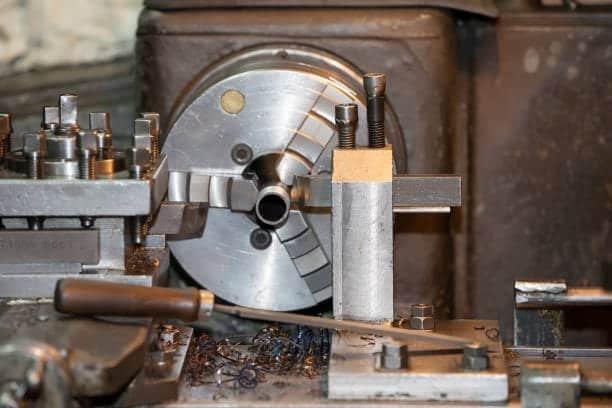
Swiss screw machine lathe with collet and cutting tool in action
Blog

CNC Swiss Screw Machining: Precision Manufacturing at Its Best

In a nutshell, Swiss screw machining is a special solution for making small exact parts in a high volume. Having roots within the watchmaking industry it has developed into a vital process for industries that require such qualities as accuracy, high quality finishes and maximum flexibility in operations with complex designs and consistent quality. By reducing wear on tools and optimization of production, cnc machine truly allows manufacturers to not only meet but exceed the stringent requirements of modern complex part production in numerous applications.

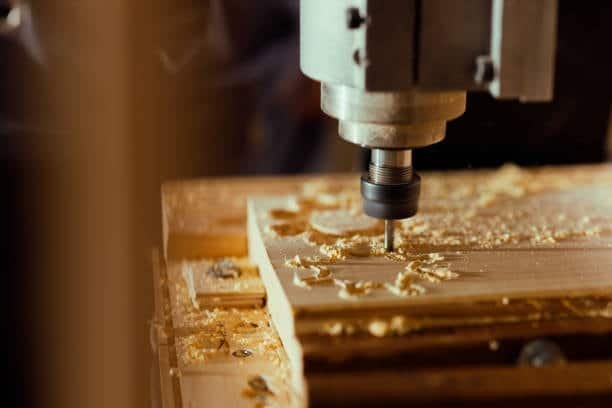
Woodworking CNC router machine milling a wooden surface with accurate tool movement
Blog

Types of CNC Machine: A Comprehensive Overview of Modern Precision Tools

The world of CNC machine is vast, with each design adapted to accomplish certain types of manufacturing operations in a timely and precise manner. Not only do subtractive operations of milling and turning take place, but so do precision operations of laser cutting and ingenious additive manufacturing, and CNC machines continue determining the near future of production. So, choosing the best machine tools, specifically the best cnc machine type, relies on material, design complexity, money availability, and performance requirements. Continuous advancements in CNC technology has led to the introduction of hybrid machines, which possess capabilities of both addition and subtraction traits, thus creating the room for flexibility in design and prototyping. Such innovations bring doors to faster production cycles, less material wastage, and manufacturing of highly customized and complex components in a number of industries.

In addition, the combination of emerging smart technologies such as; IoT, AI, and real-time data analytics is transforming the CNC terrain. Such innovations facilitate predictive maintenance, increased automation, and quality control which guarantees smooth operation of machines for minimal downtime. This is the case because manufacturers are then able to simplify things, minimize errors from humans, and bring more consistency into the production runs. Such digital evolution is not only productivity-forward but also makes CNC machining more user-friendly and flexible for small-scale businesses and state-of-the-art industrial propositions with a reliable machine control unit .

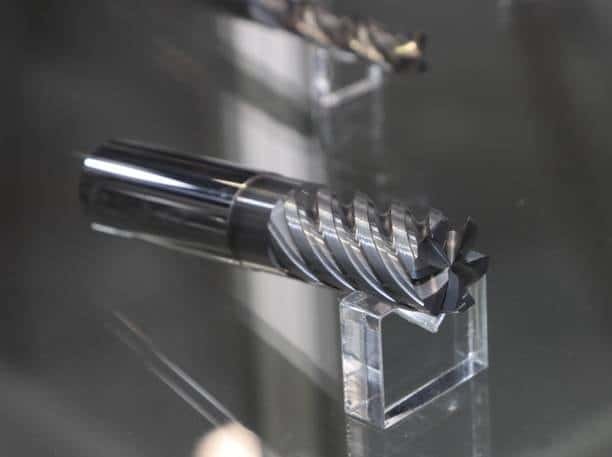
Carbide end mill tool designed for titanium CNC machining
Blog

Titanium CNC Machining: Precision and Performance in Every Cut

Conclusion, titanium CNC machining has a diverse and accurate CNC machined design coupled with the peculiar characteristics of titanium making it an all round high performance component for all industries. The process demands using specific tools as well as special techniques to enhance tool life and overcome such issues as heat buildup, tool wear, chip management, etc. Nonetheless, the produced parts are very durable, lightweight, non toxic, non magnetic, and corrosion-resistant, considering physiological ph values often achieving high ultimate tensile strength due to low thermal conductivity, rendering the use of titanium for CNC machining crucial in producing critical parts. Whether in the aerospace, medical or automotive field (among others), CNC machining delivers the accuracy necessary for the demanding needs of titanium parts.

operator managing ABS plastic injection molding machine
Blog

Understanding CNC Machining Materials: A Comprehensive Overview

Finally squeezing, CNC machining is versatile machining technique that can be used on different materials such as, metals, plastics and compound. Every material on offer has distinctive characteristics that make it appropriate for various applications, including excellent corrosion resistance and chemical resistance ranging from the aluminum’s lightweight feature to the increased performance potential of carbon fibers. The appropriate choice of the other materials for the job results in increased quality, longer life of the final product, and economic implications. Because of this ability to be better informed of the strengths and weaknesses of each material, manufacturers can then make intelligent decisions toward improving their CNC machining by shortening it and achieve the results they want.

In addition, a synergy founded on material properties and parameters of CNC machining is of huge importance for optimizing production outcomes as well. Knowing factors such as thermal conductivity, hardness, tensile strength and chemical resistance, good mechanical properties resistance to wear and corrosion, machinists can fine-tune their processes to use cost efficient material, to maximum efficiency with minimal wastage. Such an educated approach to the manufacturing method not only minimizes the process of trial-and-error in prototyping, but also assumes more consistency in full-scale production. Under pressure where the manufacturing industry requires even higher performance and customization, the effectiveness of matching up the right material with micron accurate CNC technique is critical to the continued competitiveness, product innovation and ultimately the long-term manufacturing success.

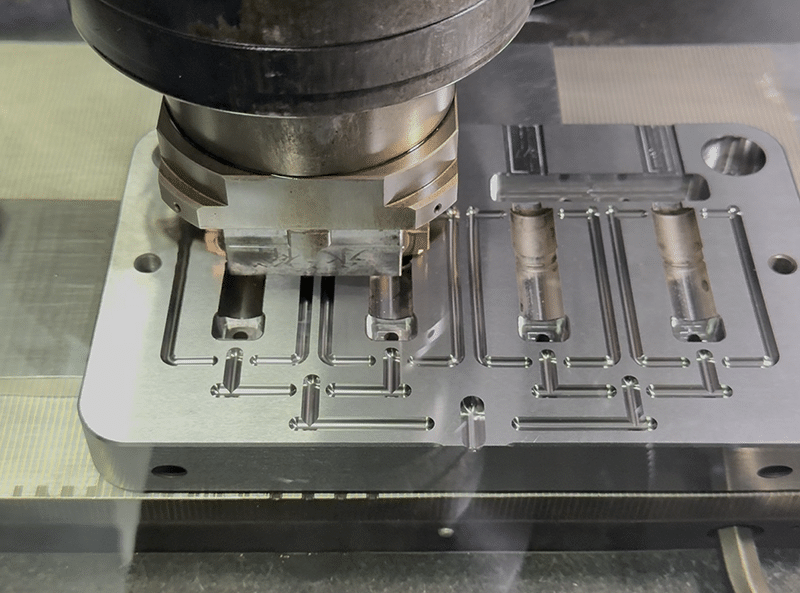
Multi-cavity mold base being machined with EDM for cooling channels and flow paths
Blog

Understanding the EDM Machine Diagram: A High-Precision Manufacturing Tool

To sum it, the EDM process is an unusual and powerful way of machining hard materials and producing complex, high-precision parts. Employing electrical discharges to erode material, it can be observed that EDM machine provides an advantage of high precision, while minimal tool wear and the ability to machine hard materials are additional benefits. EDM machines are modern-day tools important to any modern manufacturer, with applications ranging from aerospace to medical devices.

CNC machine performing dynamic milling on a large curved part with visible fluid spray and high-speed rotation
Blog

Dynamic Milling: A Modern Strategy for Smarter, Faster Machining

Milling that involves constantly engaged tool and proper course of tool paths for purposes of enhancing the rate of material removal as well as reducing the level of tool abrasion and enhancing the quality of the produced surface requires maintaining a constant load . It also is well capable of handling high speeds deep cuts and harsh materials, making it an effective approach to the conventional milling patterns, bringing new light to the machining process . This also helps in minimizing the machining time as well as increasing the quality of the work and the lifetime of the tools through effective tool design , which is very useful in almost all industries. Maintaining a stable cutting load throughout the milling process maintains the same force of cutting while reducing tool wears and improving the surface finish. This metallurgy however, reduces machining time and increases the life of the tools, especially while processing hard materials.

CNC machine showing vibration and fluid splash while turning a red flange, indicating chatter effects
Blog

Chattering in Machining: Causes, Effects, and Strategies for Elimination

Machining chatter is a regenerative type of vibration that is evidently disastrous in machining chatter since it degrades the finished surface quality leading to poor surface finish and shortens the life of the cutting tool as well as the performance of the machine tool. It can often be attributed to tool bounce, tool breakages, vibrations, or the choice of the improper cutting speed. Analysis of process variables and reduction in the level of rigidity in some machines can therefore help in understanding chatter, including workpiece chatter, and preventing it and improving the level of accuracy in machining.

One of the effective strategies of reducing chatter in reducing machining chatter is optimization of cutting parameters (cutting speed, feed rate, depth of cut) to suit the material that is being cut, incorporating effective machining strategies . Moreover, having enough rigidity on the machine tool coupled with proper tool setup and work holding Proper tool setup during the machining cycle can alleviate vibrations tremendously. Using damping systems or adaptive control technologies in CNC machines is another way to monitor and compensate for the chatter in real time to sustain stability and higher surface finish and tool life. By striking a balance between these factors, manufacturers would avoid chatter induced damage and high precision thus resulting in enhanced efficiency and operation costs.

Woman wearing safety gear using a CNC machine interface in a modern industrial facility
Blog

What is CNC? A Comprehensive Guide to Computer Numerical Control

Transformational technology called Computer Numerical Control, or CNC, automates machining using computer programming. From hand machining to sophisticated AI-driven technologies, it has changed greatly affecting sectors including aerospace, automotive, and healthcare. Each of the several CNC machines—milling machines, lathes, routers, laser cutters—fits for a certain job. Though maintenance and expenses are issues, the CNC machining makes offers precision, efficiency, and repeatability as advantages. With artificial intelligence, smart automation, and Industry 4.0 guiding the next generation of production, CNC has bright future.

CNC machine milling a block of ABS plastic with high accuracy and smooth finish
Blog

CNC Machining in the Medical Industry: Precision That Saves Lives

Besides being indispensable in manufacturing, CNC machining is particularly useful in the manufacturing of medical device components since it results in increased precision of the components, as well as biocompatibility due to the ability to exercise tight tolerance on parts produced from biocompatible materials. When making a surgical knife, a pin or a precision medical diagnostic instrument, precision medical machining is crucial when it comes to implants and minimally invasive procedures, CNC machining, no one can compromise on precision and sterility., something that CNC technology avails. Implementing patient-focused, individualized and superior-quality solutions are in congruence with speaking to both creativity and patient outcomes.

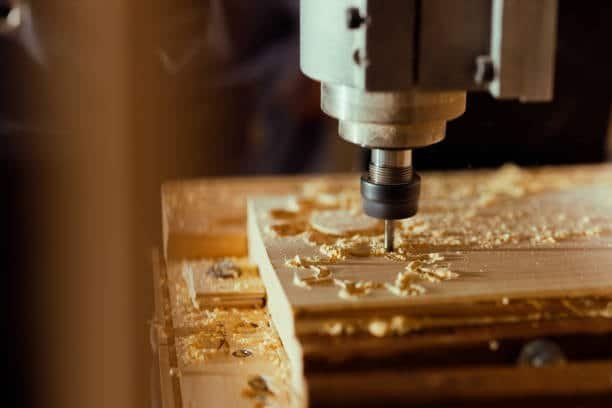
CNC router machine cutting wood material
Blog

How Does CNC Works: The Precision Engine Behind Modern Manufacturing

By TPE injection molding, soft yet durable parts of complex design, including those made with silicone, can be manufactured., there are powerful solutions. Thanks to the possibility to recycle, overhold, and quickly mold TPEs, even at high temperatures they are suitable for many applications in consumer goods. While material science continues to advance, the possibility of using TPE for part fabrication is only going to get bigger and bigger due to the advancements of TPE and molding technologies. Thermoplastic elastomer injection molding is an efficient, sustainable, and strategic choice for manufacturers that want to remain at the cutting edge within efficiency, functionality, and sustainability.

Additionally, the configurability of TPE injection molding lends itself perfectly to build with various components than whatever combination of primitives has been used. This is especially useful in automotive, medical or electronics since ergonomic design and performance in stressful environments are crucial. Manufacturers have precise control over molding parameters; therefore, putting out the perfect, exact detail, and exact consistency in each part, is second nature. With growing automation in molding processes, TPE injection molding is fast making sense of a totally cost effective and scalable practice as a modern manufacturing practice.

滚动至顶部